The Andromeda Galaxy
The light you see left it 2.5 million years ago.
2.5 million light-years away. Once your eyes have adjusted, you can see it without a telescope, as a faint smudge.
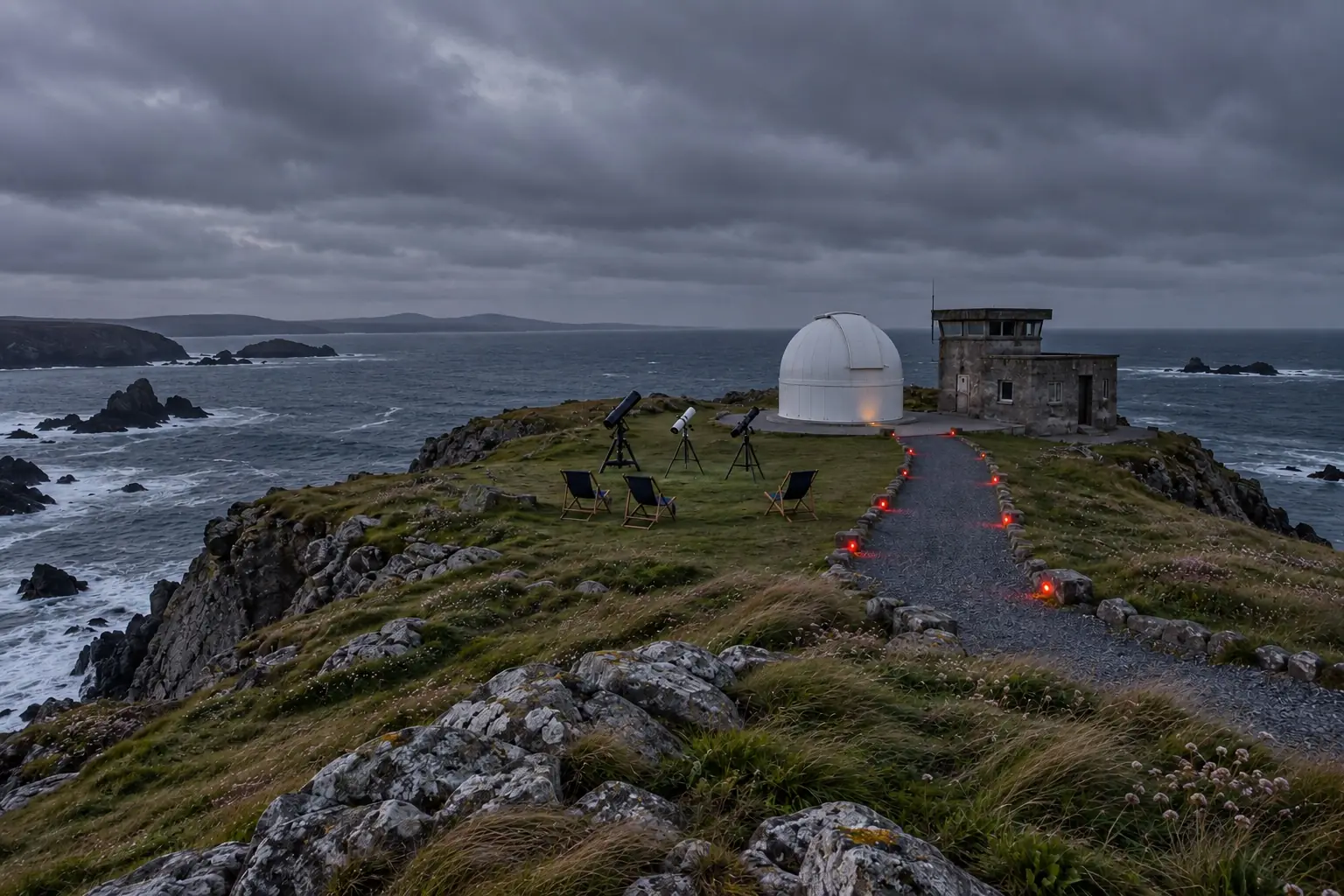
A small dark-sky observatory on a headland on the west coast of Ireland. Twelve guests at a time, after dark.
There is no town between the headland and the sea to the west.
No streetlight for eleven kilometres.
On her best night, Orla measured 21.8 on a sky quality meter.
“The dark here is the most valuable thing I own. I’d like to lend it to you for a night.”
If cloud is forecast, she emails everyone booked by 5pm. You choose: move to another night, or take a full refund.
“Cloud is the only guest who never cancels.”
She does not run a talk indoors instead. “If there’s nothing to see, I’d rather you went home warm and came back.” “I will never sell you a cloudy night.”
Orla spent eleven years as a weather forecaster. “I spent eleven years telling people what the sky would do. Now I show them what it’s for.”
Orla runs every night herself. She is the only person behind the observatory, and she is the one who will meet you in the car park.
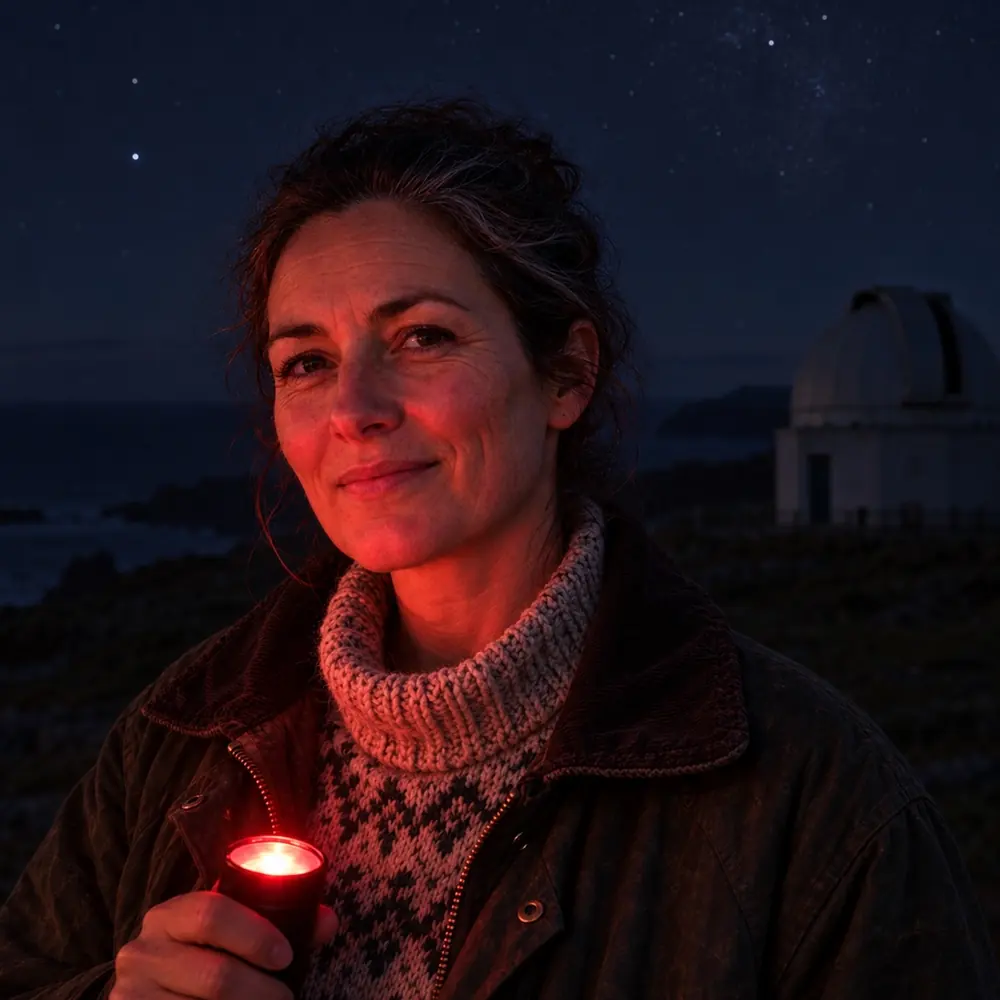
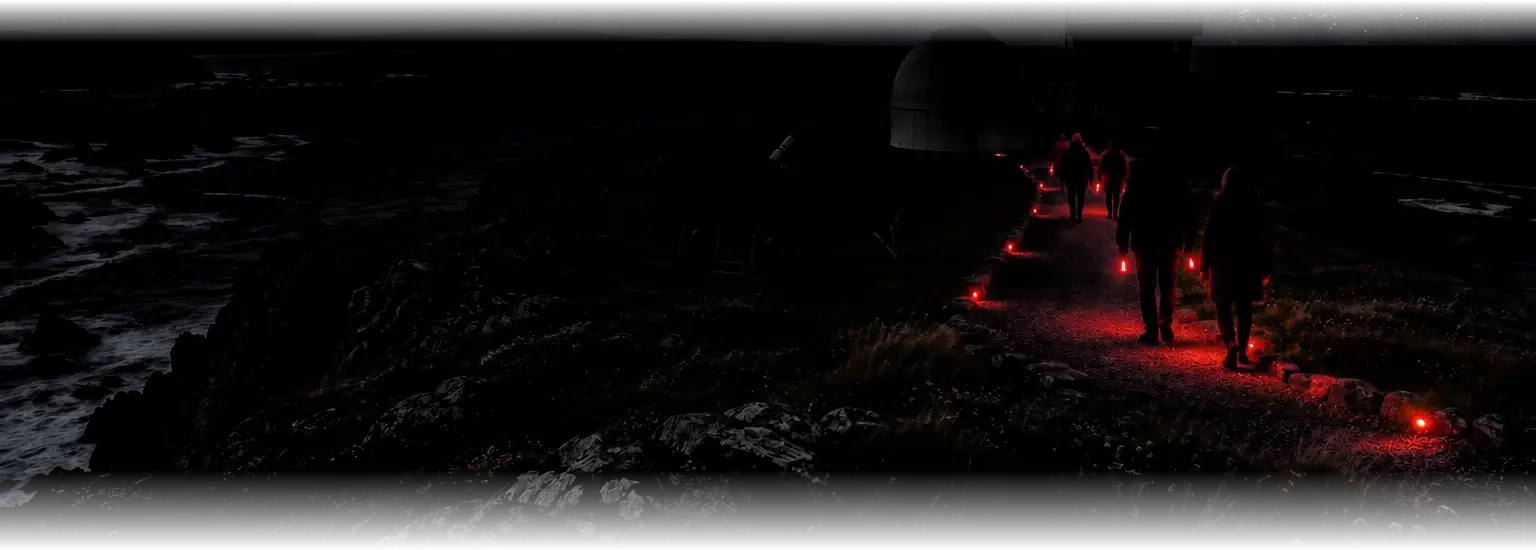
She hands everyone a red torch.
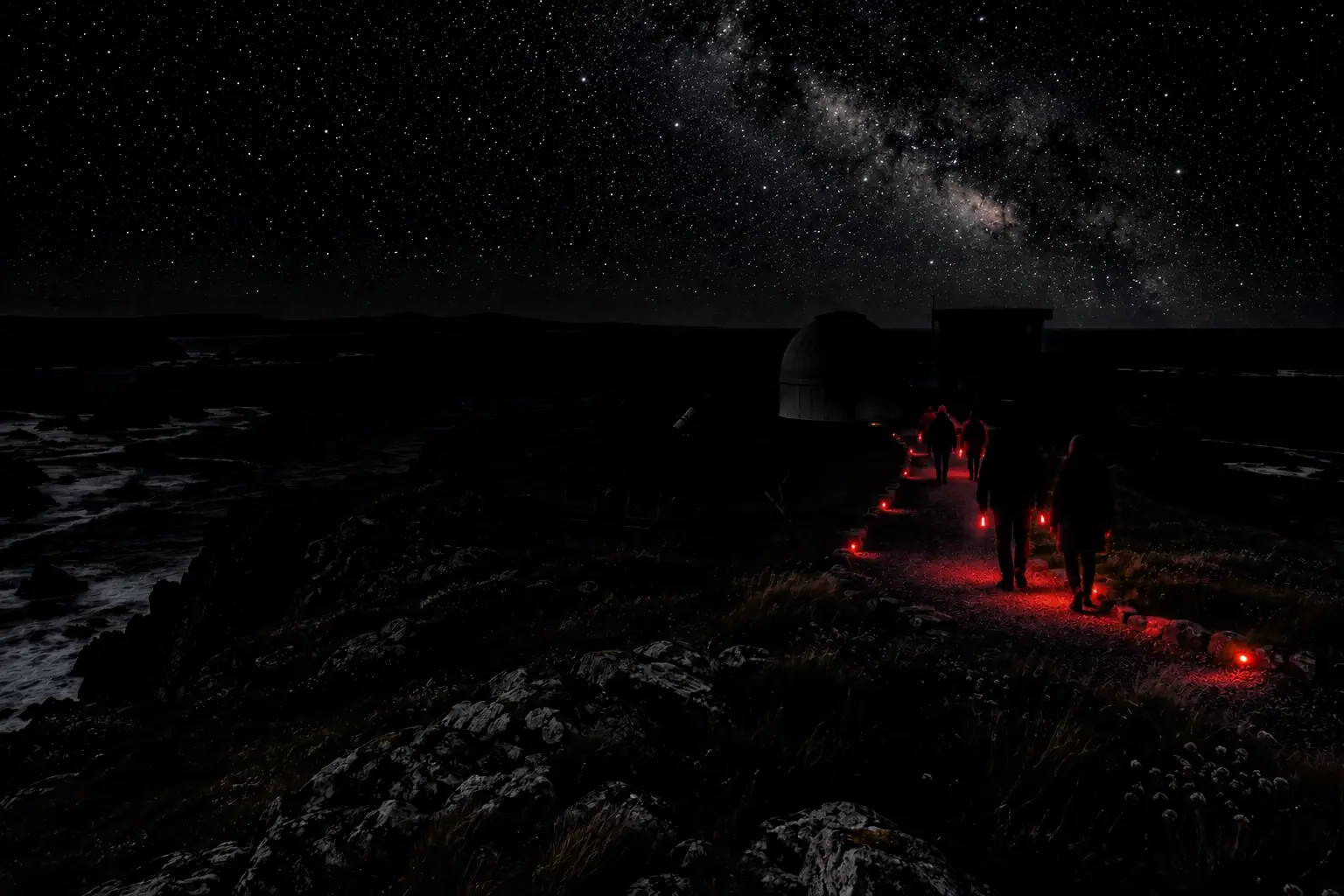
Level, 150 metres, edged with low red lights. The sea is on three sides, and on a still night you can hear it below the cliff.
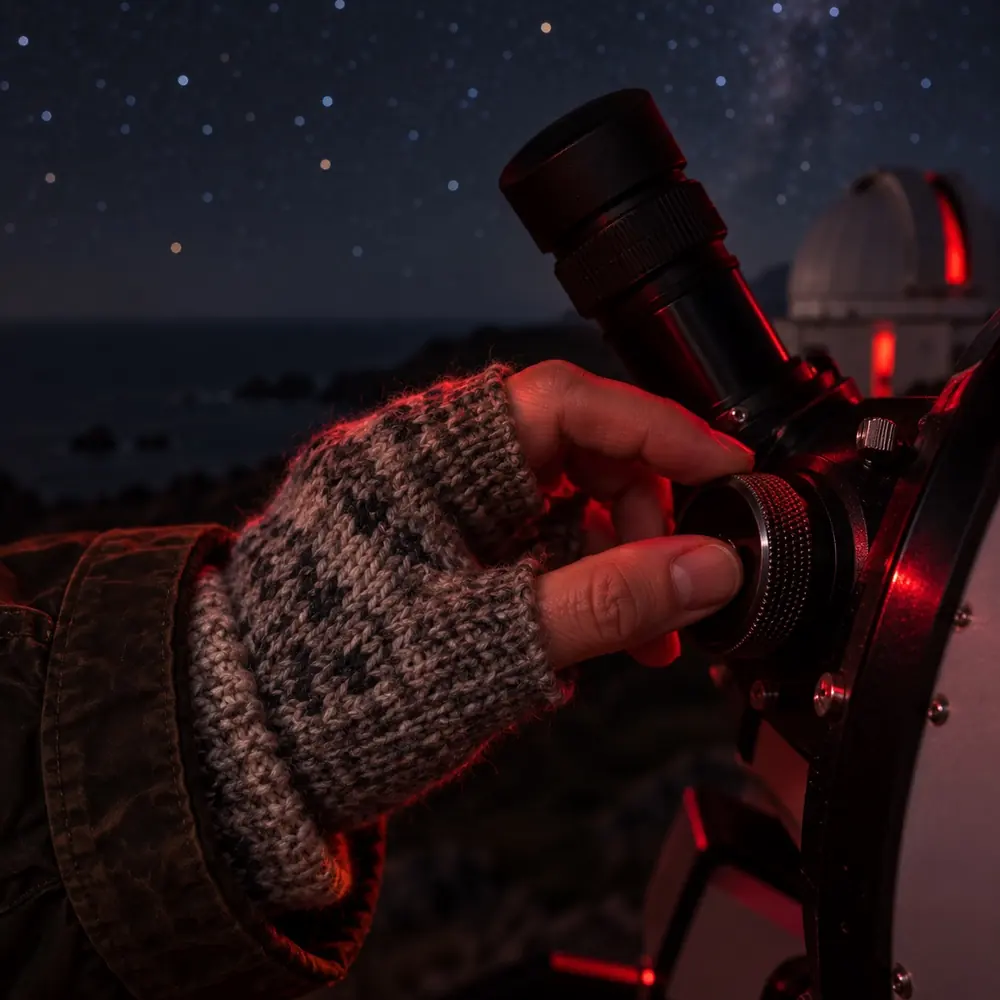
Only red light after dark. Phones on their dimmest red setting, or put away.
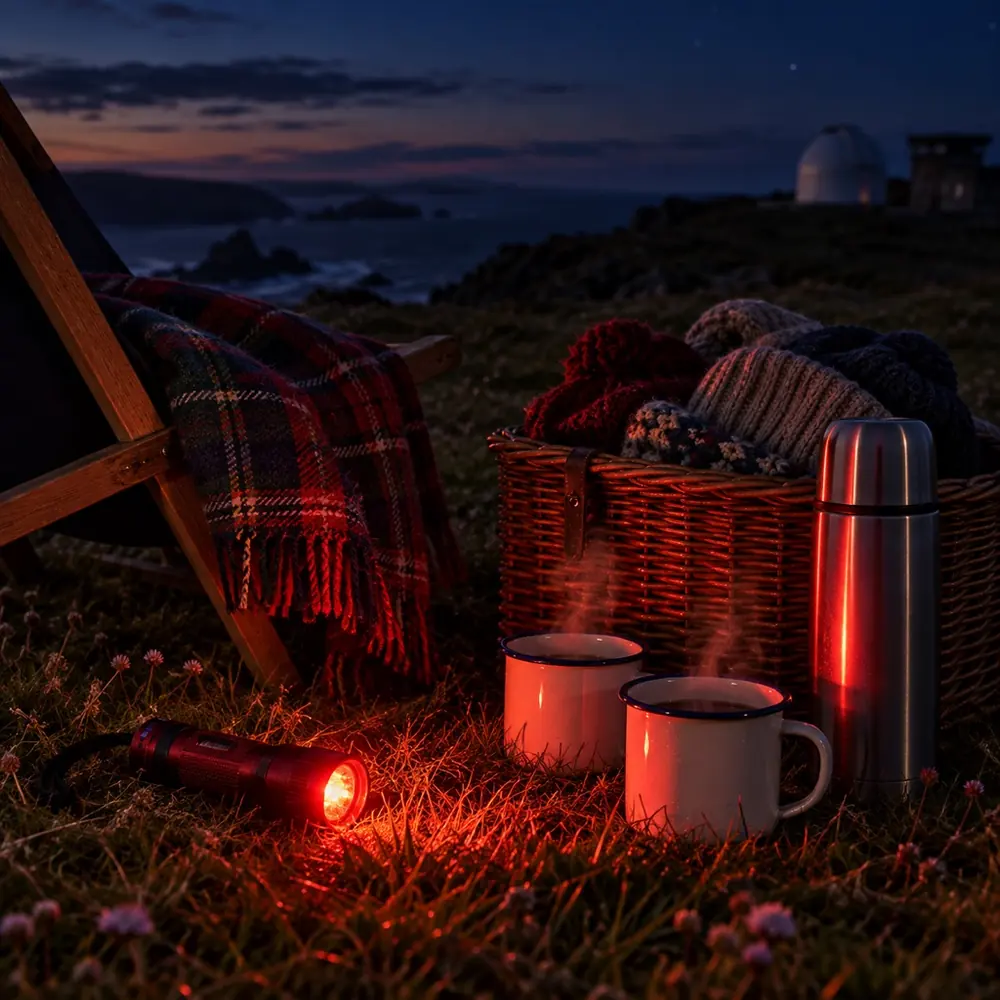
Tea, hot chocolate and a basket of woollen hats.
White light resets your eyes. They take about twenty minutes to adjust again.
So that is where the night begins.


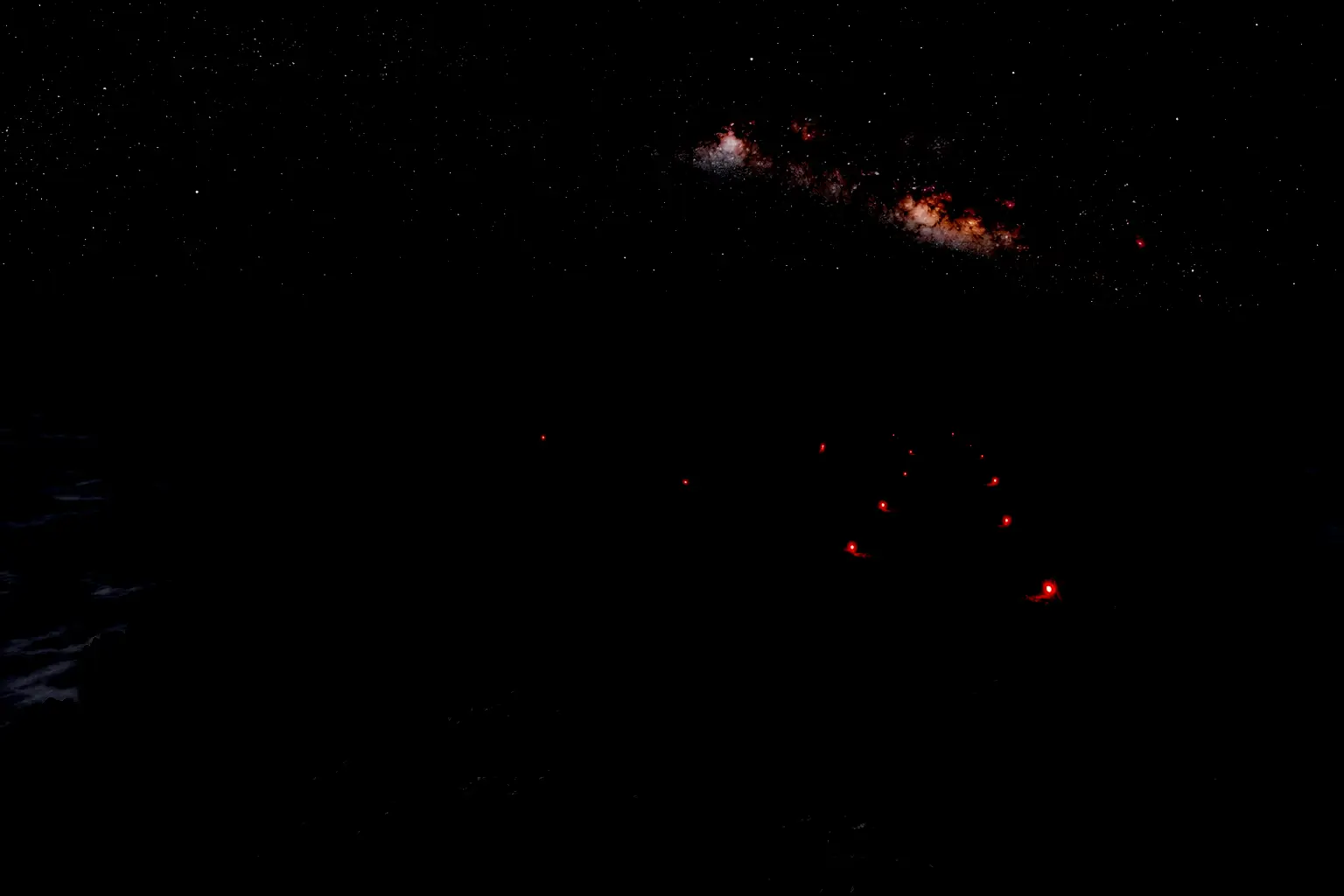
Graded toward the eye. The photograph it comes from is a long exposure, with far more stars and colour than you will see.
Twenty minutes of letting your eyes adjust.
Orla points out what is appearing, with a green laser pointer, as more and more stars come through.
“Give your eyes twenty minutes and they’ll give you the Milky Way.”
At that darkness the Milky Way is not a haze. You can see its dark lanes with your own eyes.
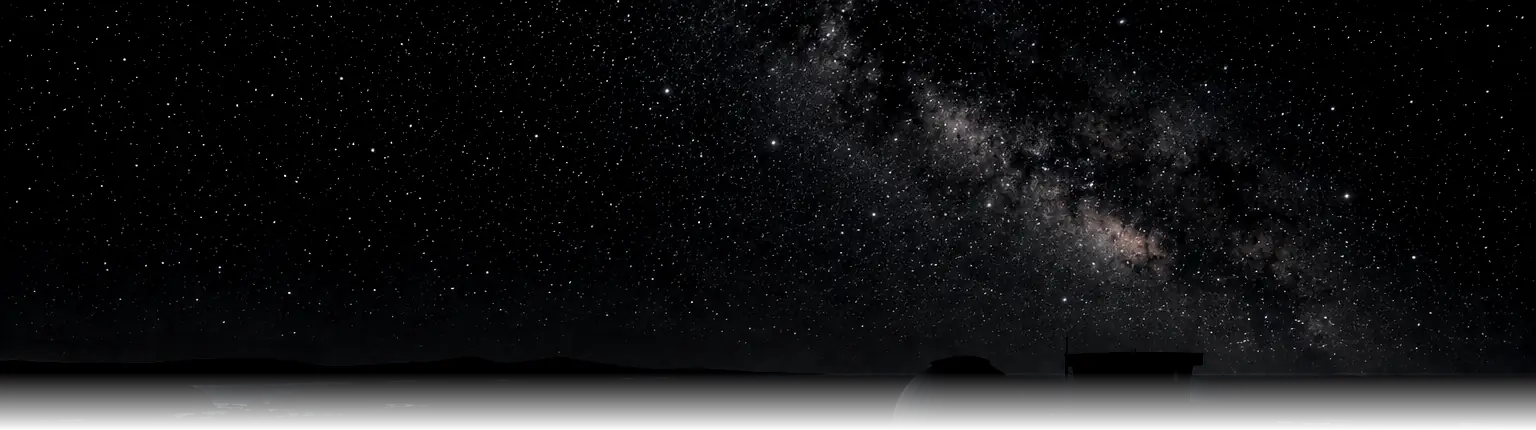
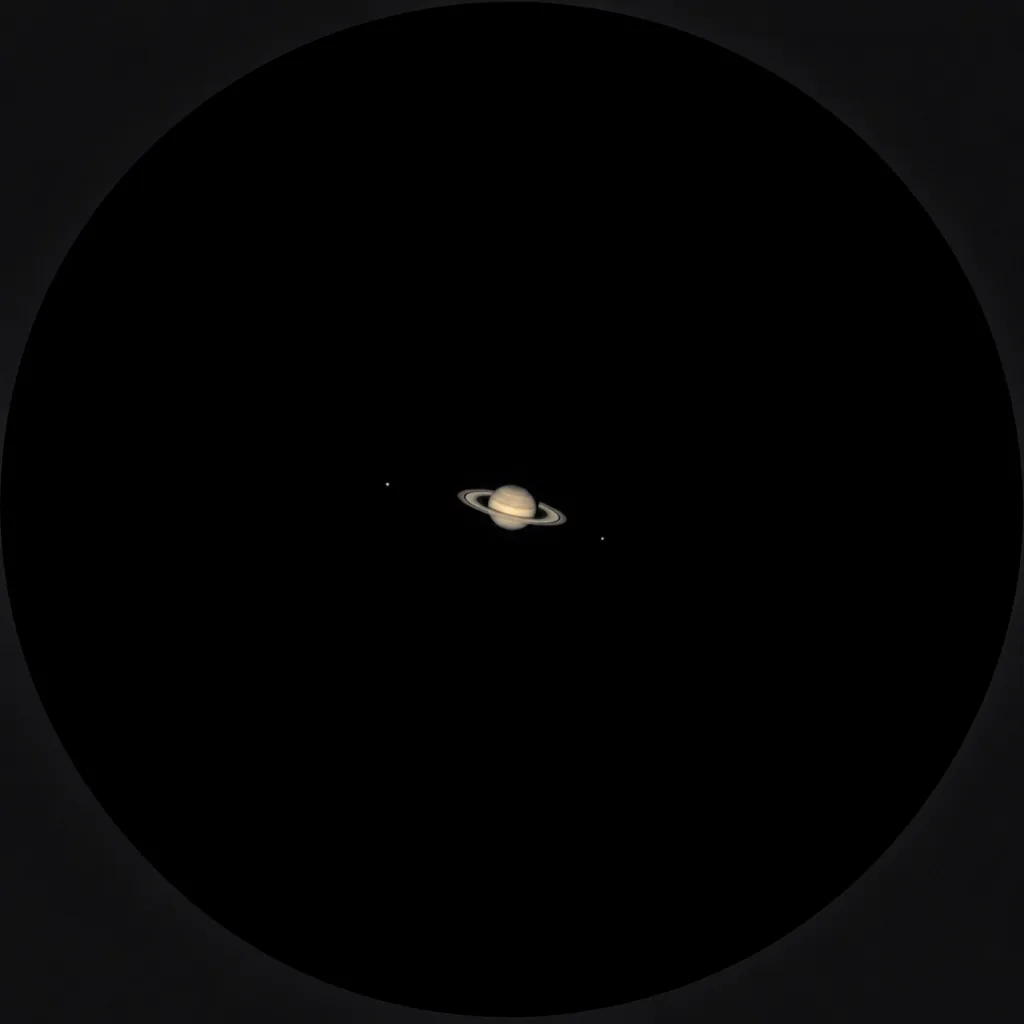
The sky photographs on this page are long exposures, apart from Saturn in the eyepiece. They hold more stars and far more colour than the eye sees.
To your eye, on a good night here, the Milky Way is a pale, textured band across the sky with dark lanes in it. That is the honest version, and it is the better one to be standing under.
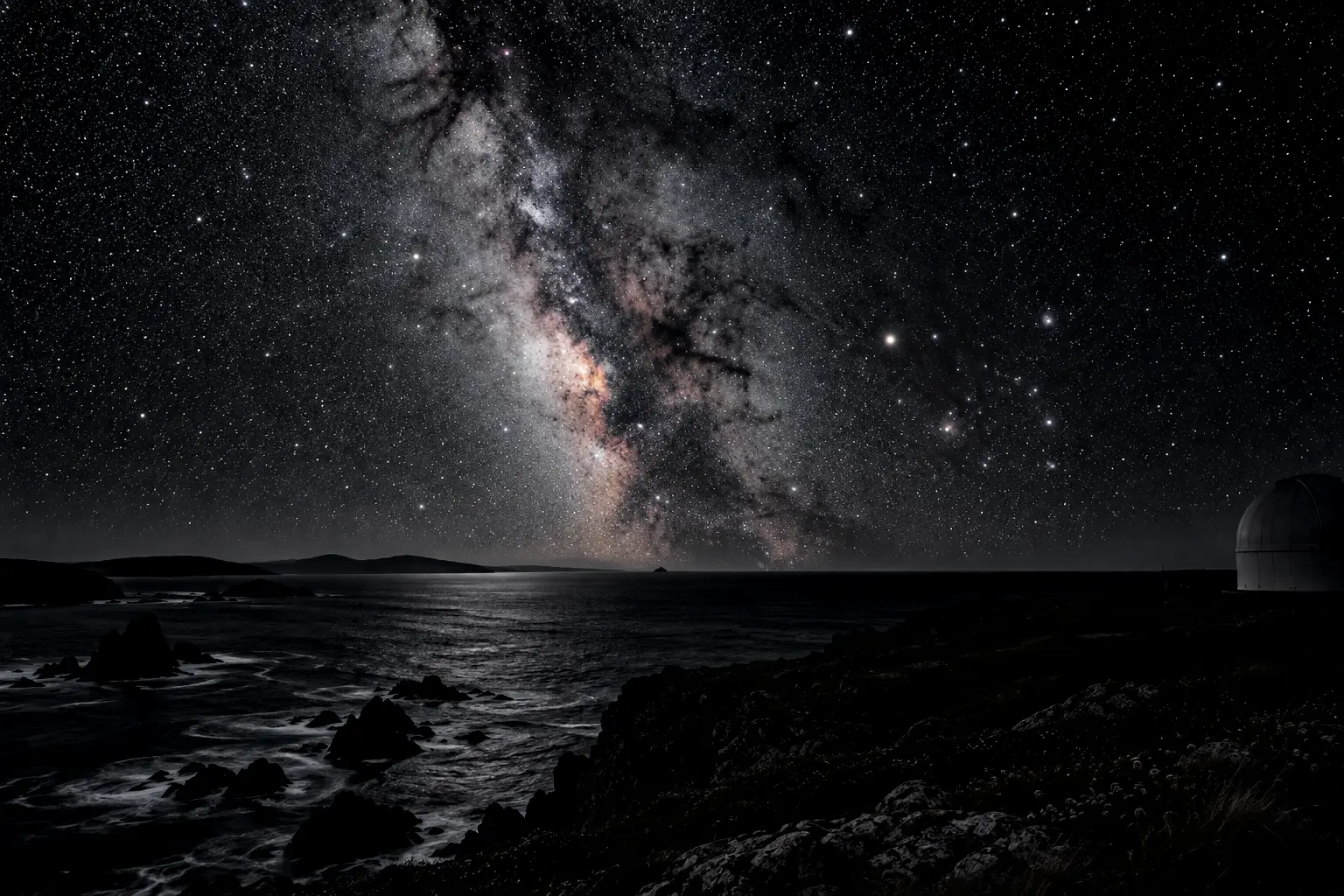
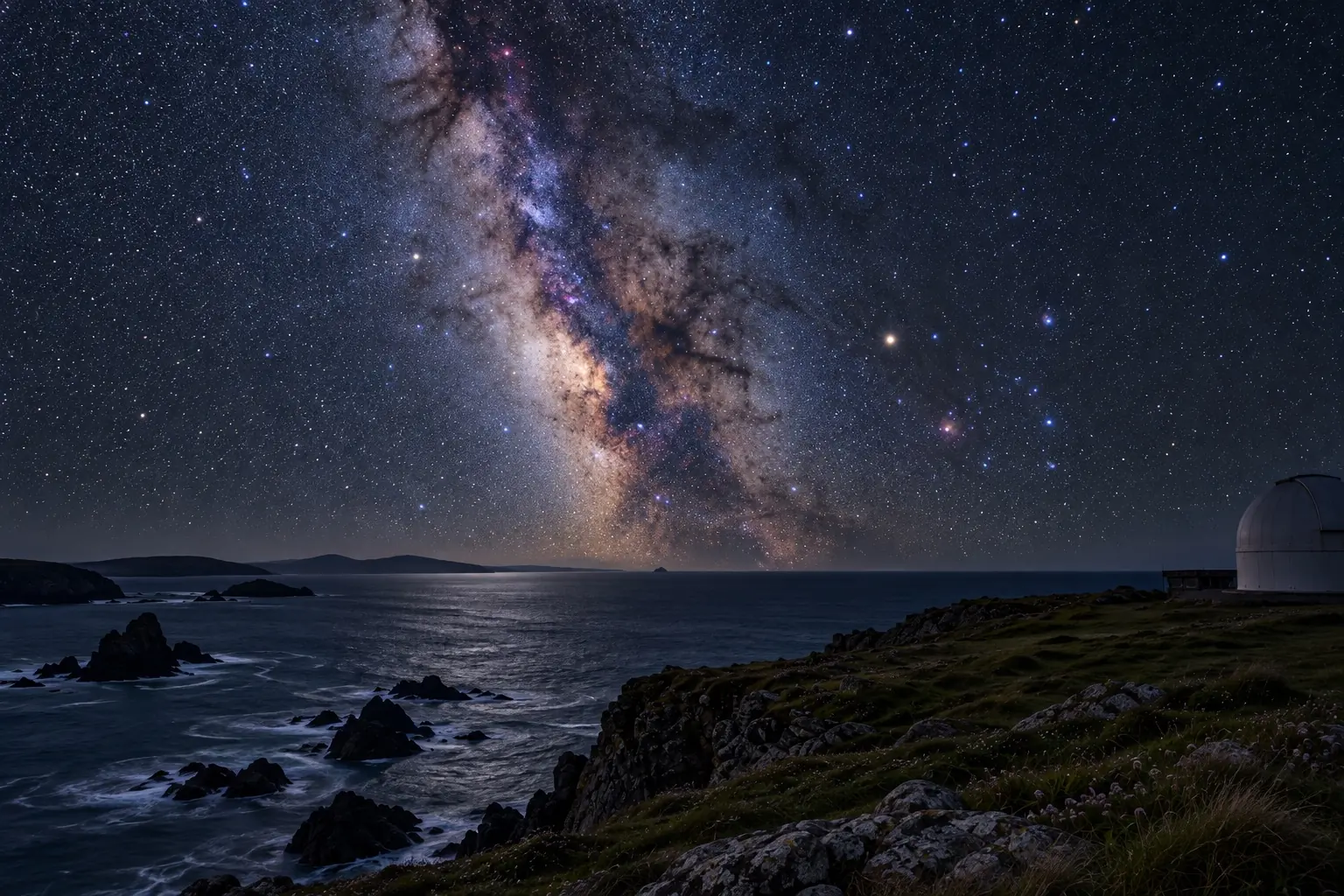 The camera. A long exposure.
What you see depends on the season and the sky. Orla chooses on the night.
The light you see left it 2.5 million years ago.
2.5 million light-years away. Once your eyes have adjusted, you can see it without a telescope, as a faint smudge.
Autumn and early winter.
Small and sharp in a black field, with two moons as points. This one is true to the eye.
Across the whole sky, over the sea.
Best in autumn. No telescope needed: sit in a deckchair, and look.
A cloud where stars are forming.
That is the Orion Nebula, in winter. The Pleiades, a cluster of young stars, are there through the winter.
About two hours, starting after full darkness. Twelve guests at most.
Sky nights run from late August to mid-May, Thursday to Saturday. Closed from mid-May to the end of July.
Twelve guests at most. Orla will meet you in the car park.
Booking is online, for a named night, and opens for each month on the first of the month before. Questions go to hello@doonvarra.ie. Orla answers every email herself.
“I will never sell you a cloudy night.” Orla Breen