Skip to content

Doonvarra Head Observatory

A small dark-sky observatory on the west coast of Ireland. Twelve people a night, and no streetlight for eleven kilometres.

Book a sky night

“The dark here is the most valuable thing I own. I’d like to lend it to you for a night.”

Orla Breen, astronomer

There is no town between the headland and the sea to the west, and no streetlight for eleven kilometres.

Orla chose Doonvarra Head for its darkness before she had a telescope. Most people in Europe never see the night sky the way you can see it from here.
21.8
Her best night on a sky quality meter. At that darkness the Milky Way is not a haze: you can see its dark lanes with your own eyes.
11 km
To the nearest streetlight. The sea is on three sides, and on a still night you can hear it below the cliff.
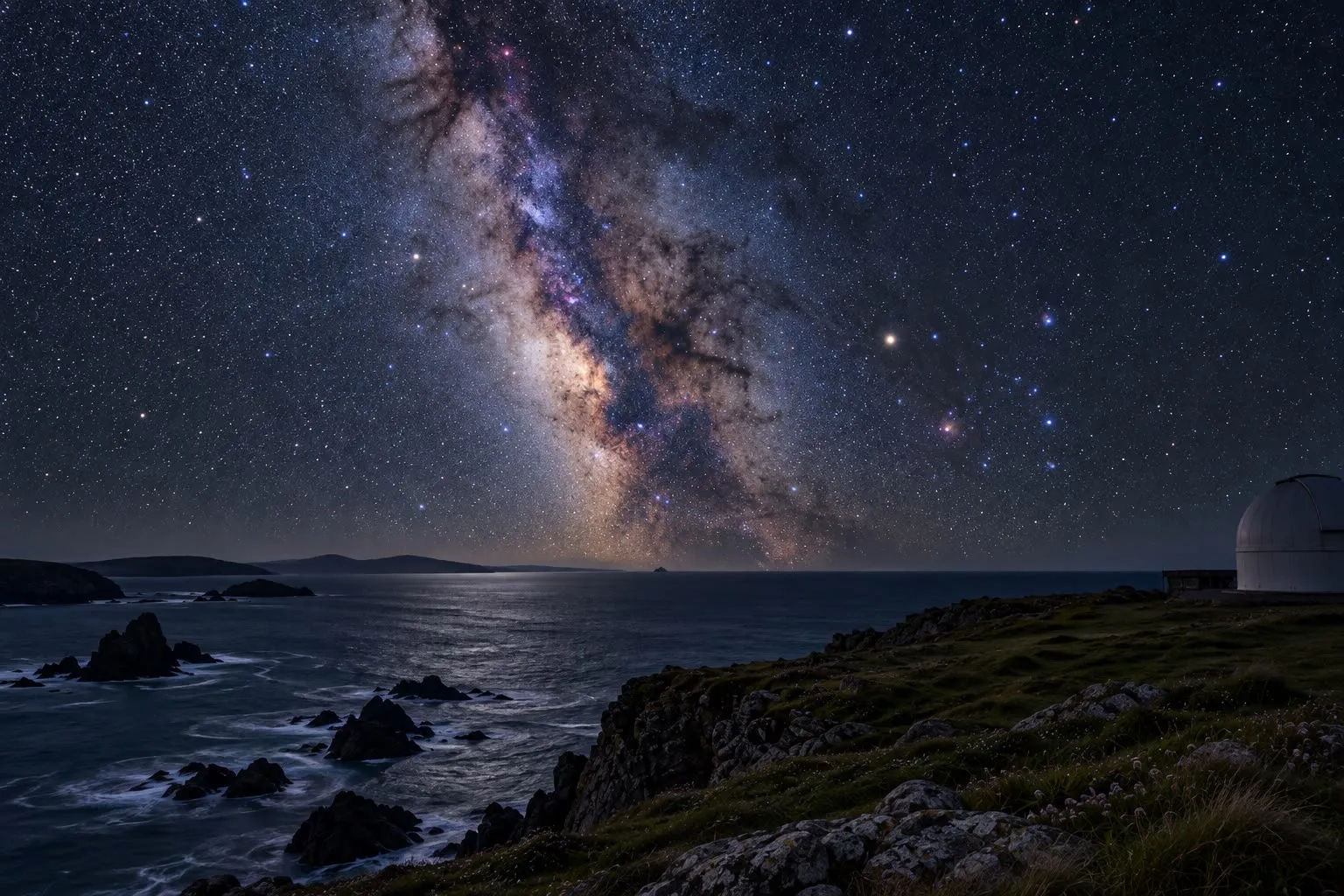
The Milky Way rising out of the Atlantic over a rocky coast, with the observatory dome at the right edge of the frame.
Long exposure. The camera shows more stars and far more colour than your eye will. On a good night here, your eye sees the Milky Way as a pale, textured band with dark lanes in it.

“Cloud is the only guest who never cancels.”

Orla Breen, who spent eleven years as a weather forecaster
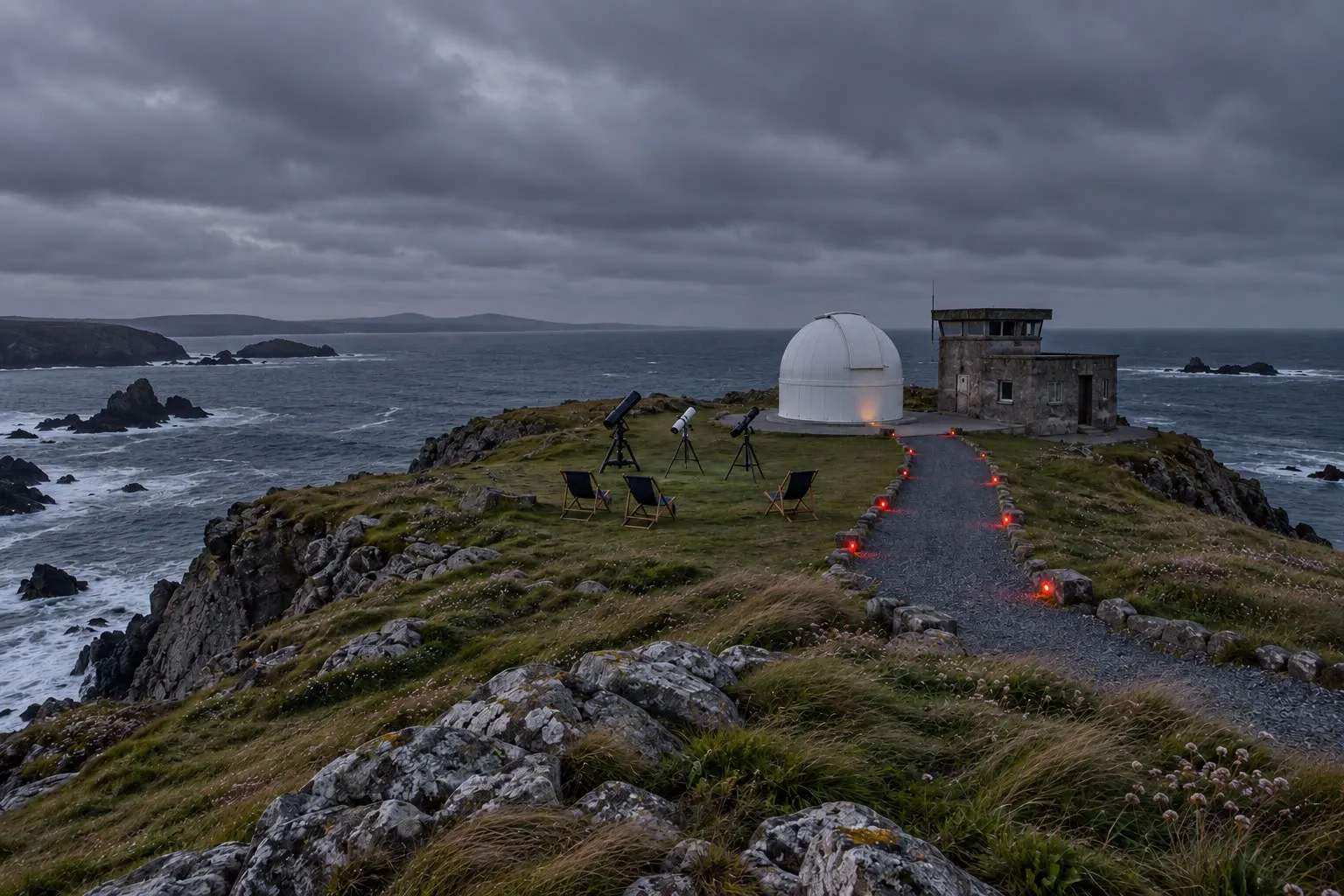
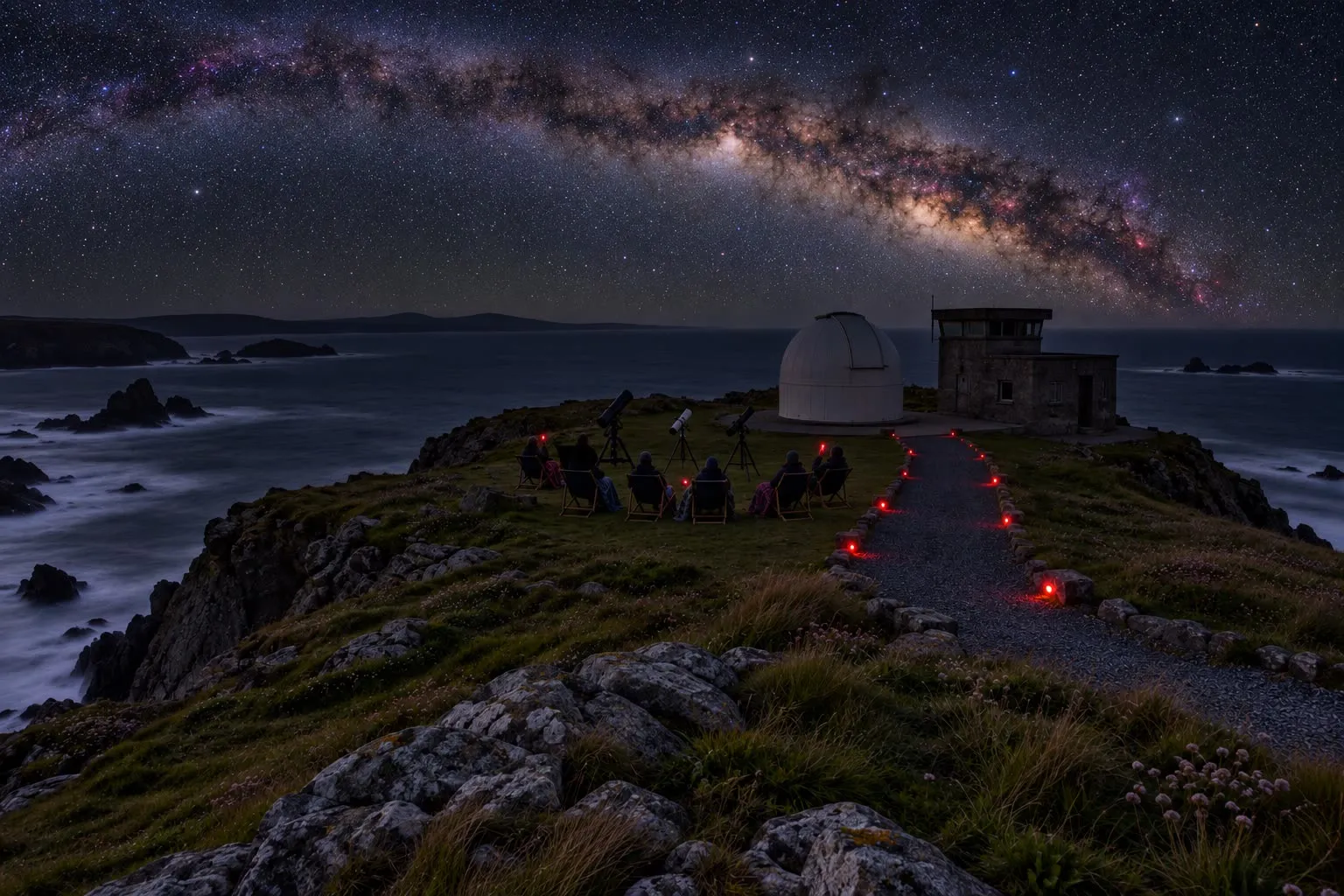
The headland under full cloud at dusk: the dome closed, the lawn empty, the sea grey. The same lawn on a clear night: guests in deckchairs with red torches, three telescopes, the dome and the old lookout under the Milky Way.
The same lawn on two evenings. Full cloud at dusk, dome shut: Orla will already have emailed you. Long exposure on the clear night, which shows far more stars and colour than your eye will see.

“I spent eleven years telling people what the sky would do. Now I show them what it’s for.”

  1. 4pmOn the day of every session, Orla checks the forecast.
  2. By 5pmIf cloud is forecast, she emails everyone booked. You choose: move to another night, or a full refund.
  3. On the lawnIf the sky closes after you’ve arrived, you get a free second visit.

“I will never sell you a cloudy night.”

She would rather move your booking than show you a grey sky and call it an experience. There is no talk indoors instead. “If there’s nothing to see, I’d rather you went home warm and came back.”
Book a sky night

Red light only, after dark.

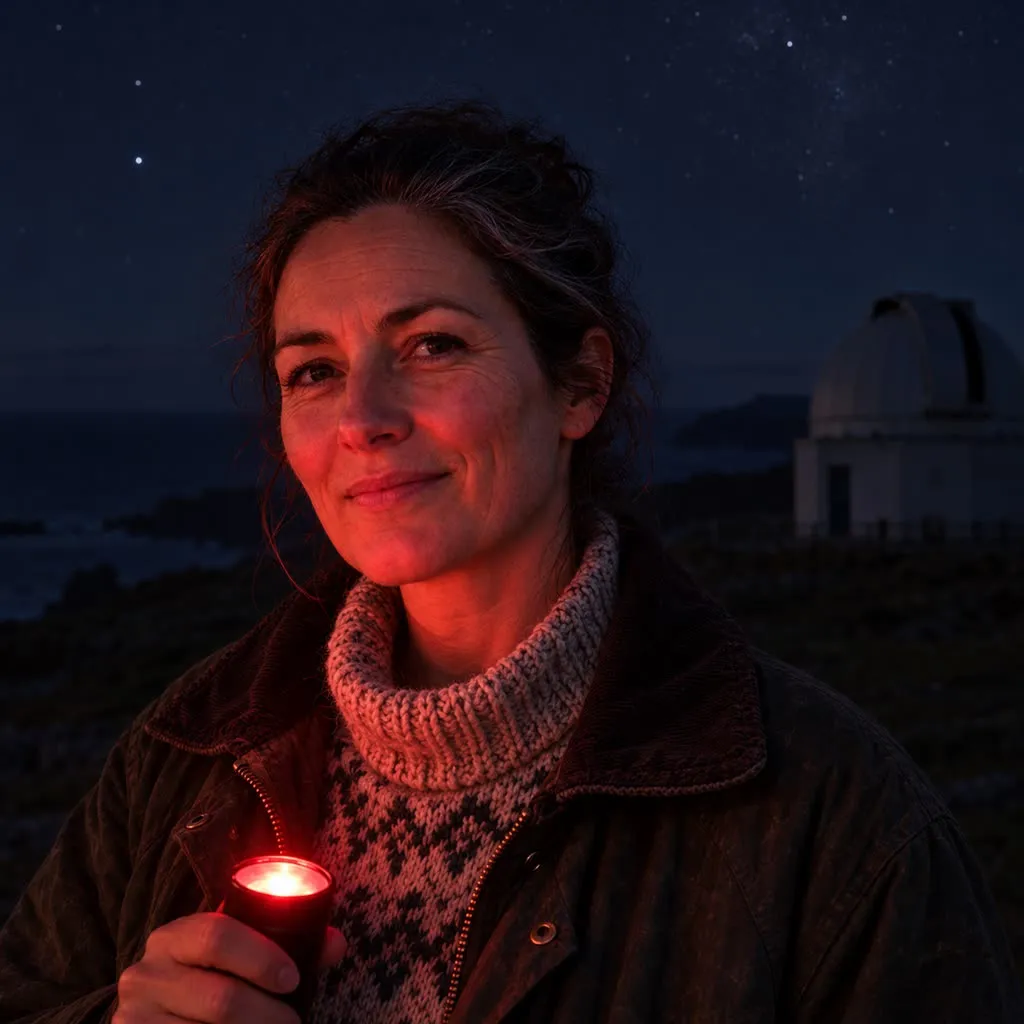
Orla Breen at night on the headland, her face lit by the red torch she holds, the dome behind her.
Orla, and the red torch you’ll be given.

Orla runs every night herself. She is the only person behind the observatory, and she is the one who will meet you in the car park.

From there the path to the lawn is level, 150 metres long and edged with low red lights. Everyone gets a red torch. Phones go to their dimmest red setting, or away.

White light resets your eyes, and they take about twenty minutes to adjust again. So nobody switches one on. Not even for a photograph.
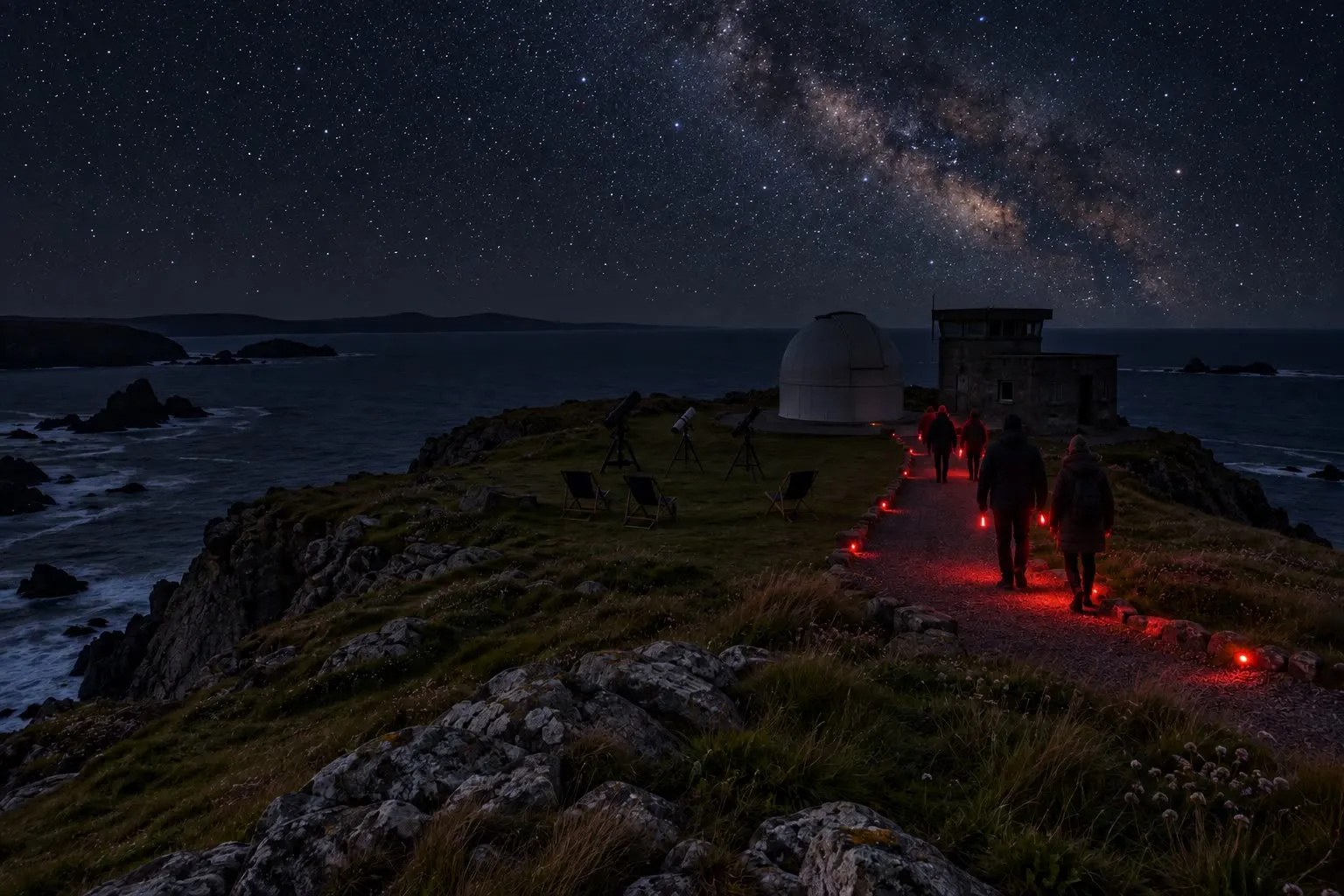
Guests walking the level path between its low red lights towards the dome and the lookout, the sea on either side.
Long exposure. The path is as dark as this looks. The sky above it will not be this bright or this colourful to your eye.

The first twenty minutes

20min

A drawing, not a photograph: roughly how the sky fills in as your eyes adjust.

You’re probably reading this with the lights on.

On the lawn there’s no telescope yet. You sit down, and give your eyes time.

Stars come through one at a time. Orla points each one out with a green laser as it arrives.

Andromeda turns up as a faint smudge. The light you’re seeing left it 2.5 million years ago.

“Give your eyes twenty minutes and they’ll give you the Milky Way.” Orla
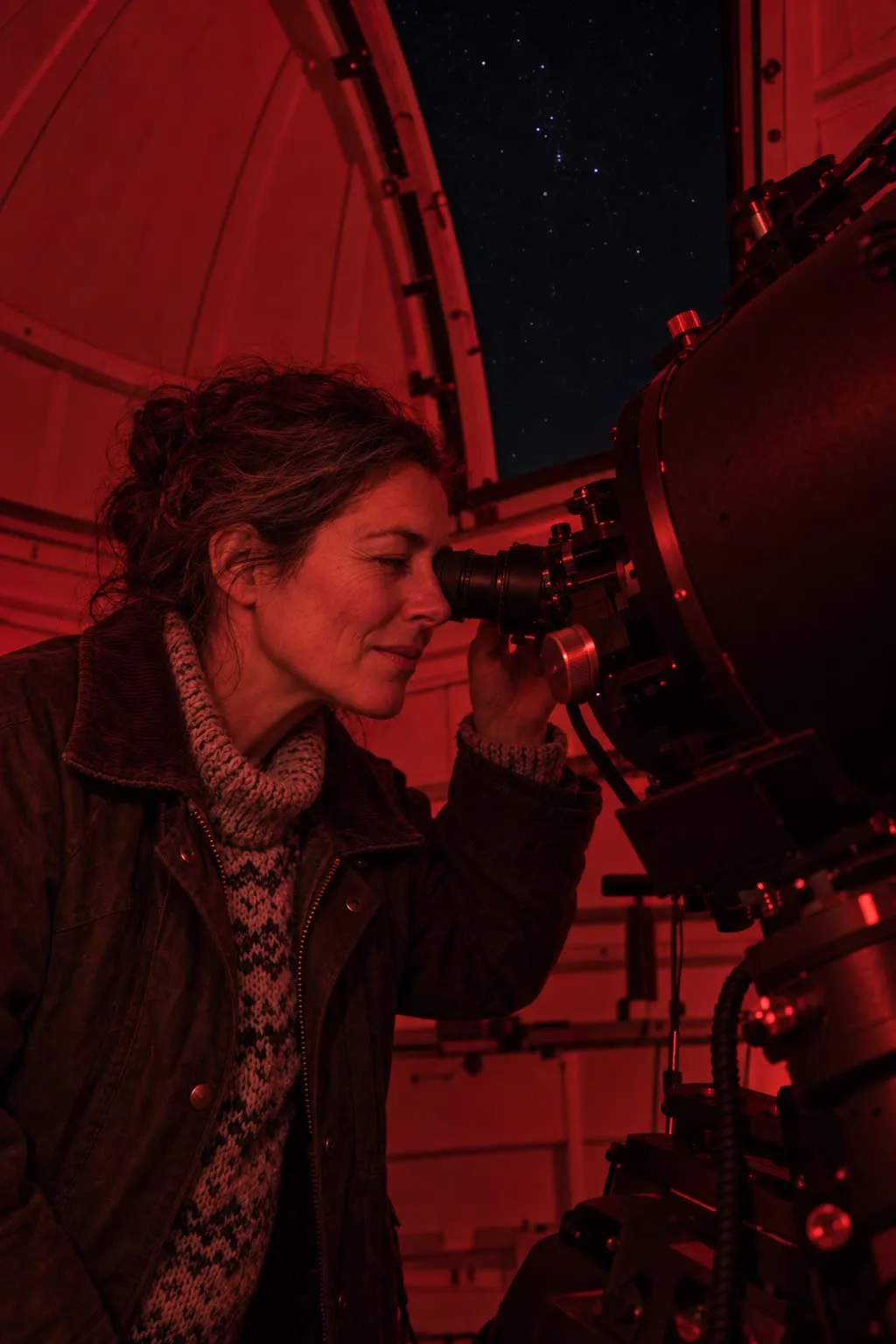
Orla at the eyepiece of the 14-inch reflector inside the dome, lit only by red light, the slit open to the stars.

Through the eyepiece

The 14-inch reflector lives in the dome; three smaller telescopes stand on the lawn. What you see depends on the season and the sky, and Orla chooses on the night.

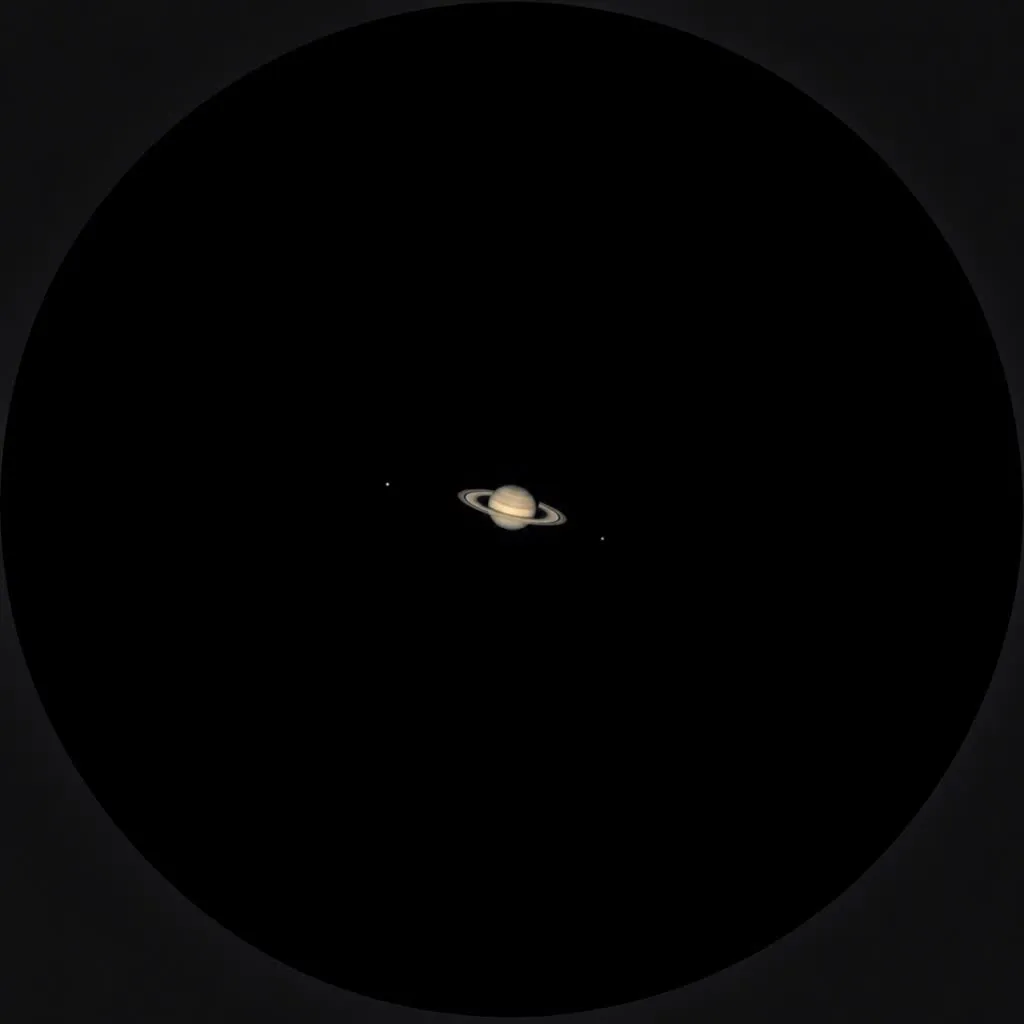
Saturn through the telescope: small and sharp in a black field, rings visible, two moons as points of light.

Saturn

When
Autumn and early winter
Your eye
Small and sharp, the rings plain, two moons as points
Plate
Photograph, true to the eye

Andromeda

When
Once your eyes have adjusted
Your eye
Another galaxy, as a faint smudge. The light left it 2.5 million years ago
Plate
Drawing

The Milky Way

When
Best in autumn
Your eye
Across the whole sky over the sea: a pale band, dark lanes in it
Plate
Drawing

Orion Nebula

When
Winter
Your eye
A cloud where stars are forming
Plate
Drawing

The Pleiades

When
Through the winter
Your eye
A cluster of young stars
Plate
Drawing

Photographs of the sky are long exposures, with more stars and more colour than any eye. What you get here is smaller and greyer, and it is the thing itself.
The plain facts, over tea.

A sky night
About two hours, starting after full darkness. Twelve guests at most.
Price
€35 for adults, €18 for under-16s. Children aged 8 and over are welcome.
Season
Late August to mid-May, Thursday to Saturday. In late August the first sessions start at 22:30; in midwinter, at 19:00. Nights are best without the moon, so the calendar follows it.
Closed
Mid-May to the end of July. At this latitude the sky never gets fully dark in those weeks: even at midnight, twilight hangs on the northern horizon.
Booking
Online, for a named night. Booking opens for each month on the first of the month before.
What to bring
More warm layers than you think. It is a headland in the Atlantic, and it is colder at night than it looks from the car.
On the lawn
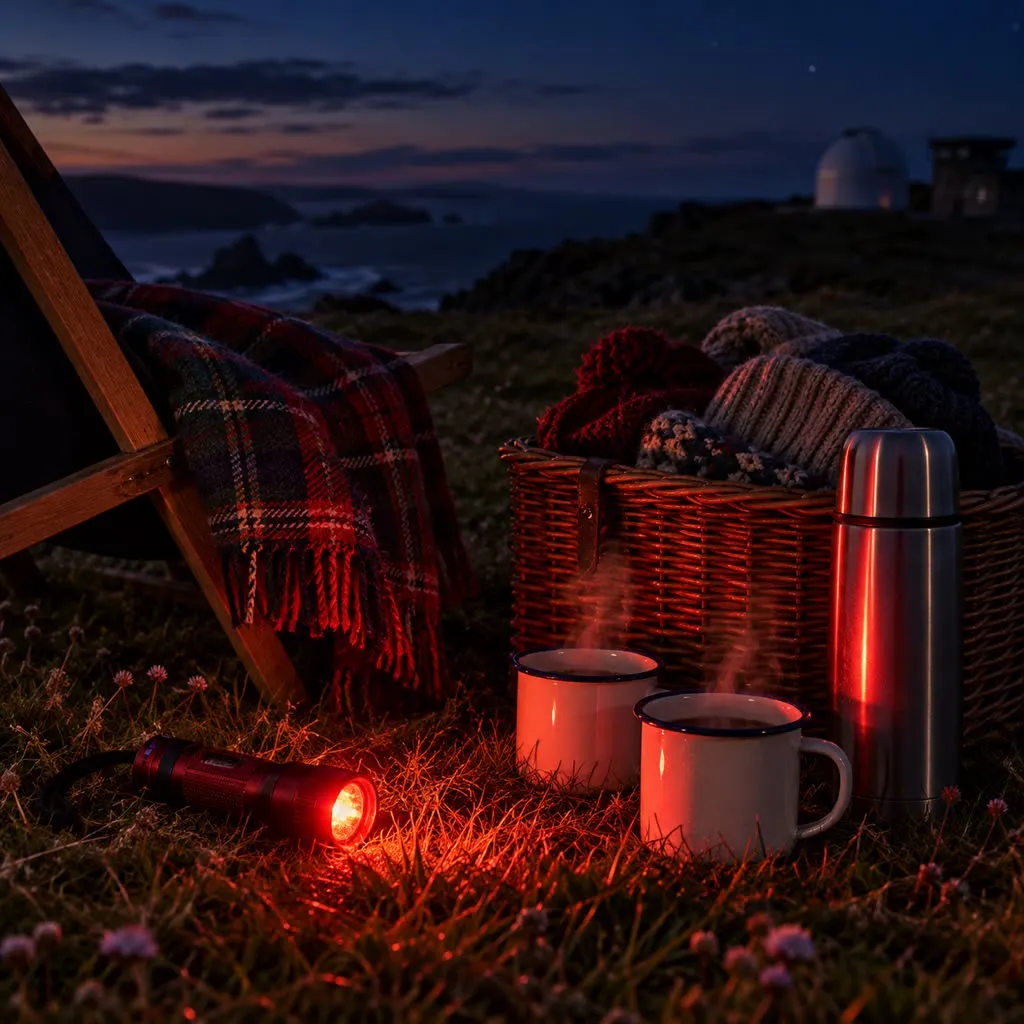
Deckchairs and blankets between the telescopes. Tea, hot chocolate and a basket of woollen hats.
Access
The path is level and 150 metres long. One telescope has a low eyepiece that can be used from a chair.
If plans change
Move your booking free up to 24 hours before. Inside 24 hours, it can still be moved if another guest takes your place.

Book a sky night

A basket of woollen hats, a flask and two steaming mugs of tea on the lawn, a blanket over a deckchair, all lit by a red torch.
The basket of hats, and tea, by red torchlight.

Book a sky night

Booking is online, for a named night, and each month opens on the first of the month before. If the forecast at four says cloud, you’ll hear from Orla by five.

hello@doonvarra.ie
Orla answers every email herself.