The Milky Way
Across the whole sky over the sea. Best in autumn, when the first sessions start at 22:30.

A small observatory on a headland in the Atlantic. Twelve people a night, and the sky most people in Europe never see.
The night frame is a long exposure. Your eyes will see less than the camera did.
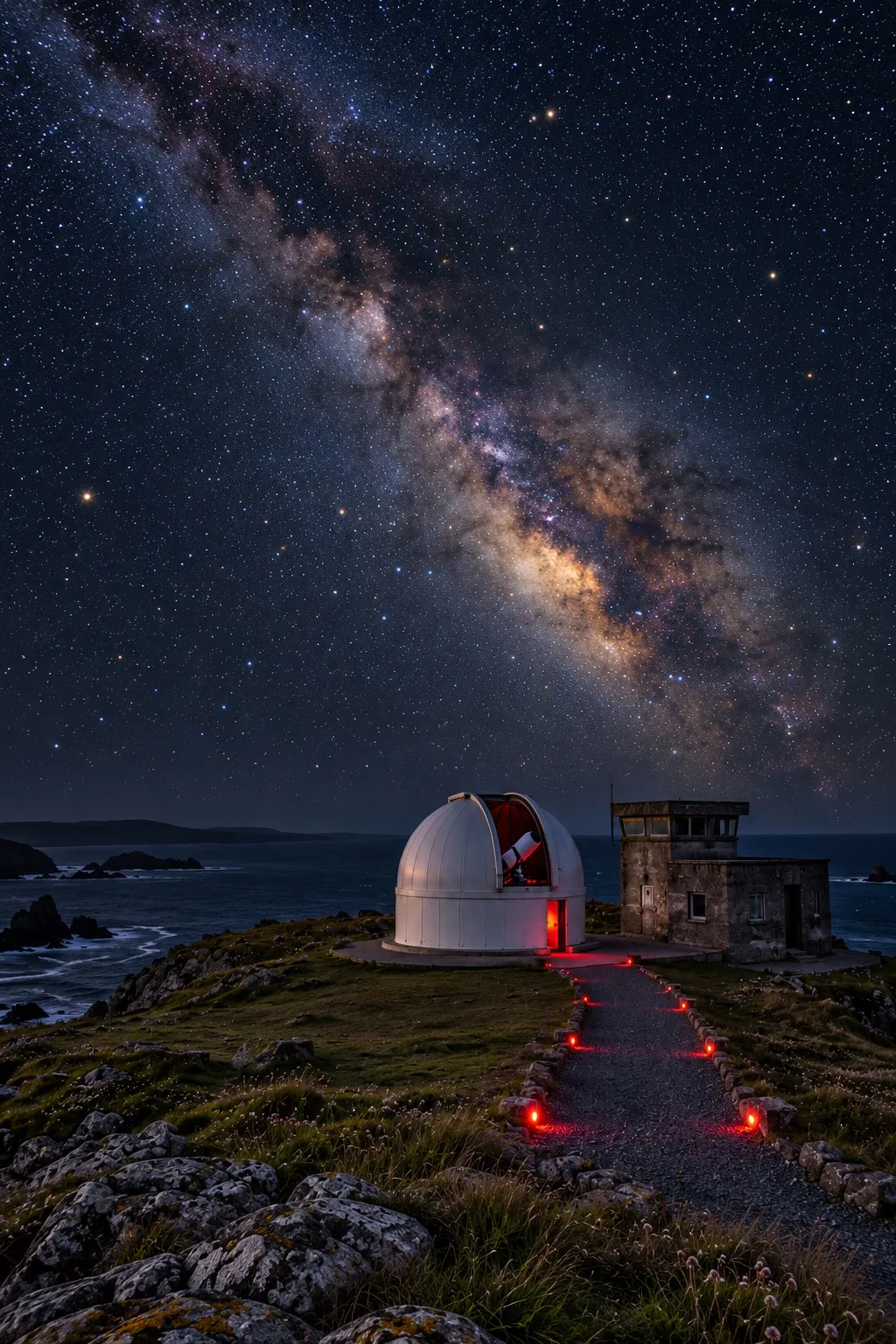
No town between the headland and the sea to the west.
On her best night she measured 21.8 on a sky quality meter.
At that darkness the Milky Way is not a haze.
You can see its dark lanes with your own eyes.
“The dark here is the most valuable thing I own. I'd like to lend it to you for a night.”Orla Breen
Every night-sky photograph on this page is a long exposure. The camera sat open for longer than an eye can, and it collected colour an eye cannot. To your eye, on a good night here, the Milky Way is a pale, textured band across the sky with dark lanes in it. Not the colours in the pictures.
Orla will not sell you the photograph. What she has is the dark, twenty minutes of your patience, and a telescope. The light you see from Andromeda left it 2.5 million years ago, and it arrives in your eye, not in a sensor. That is the more interesting fact.
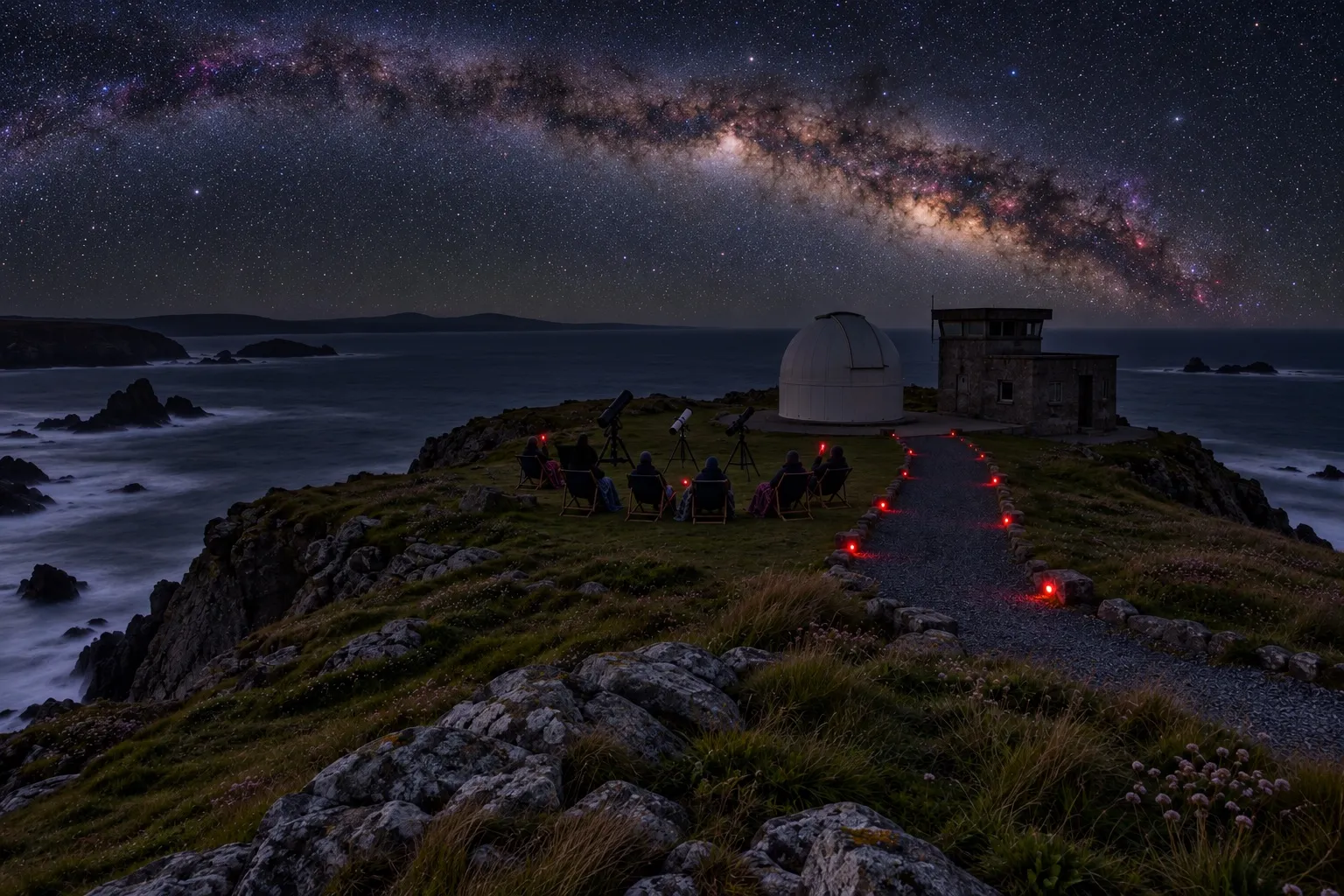
Twenty minutes in the dark
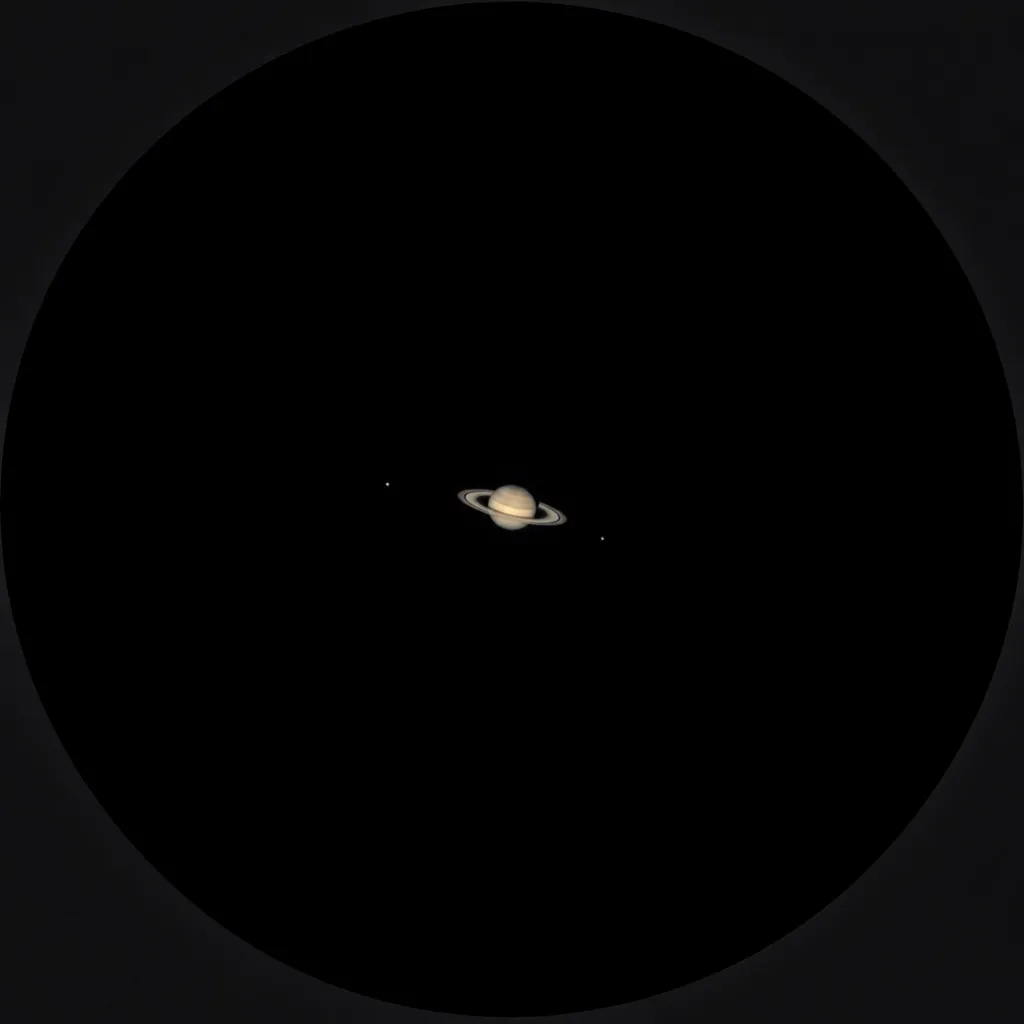
A drawing, not a photograph. Fainter still on a screen with the lights on.
Andromeda. Another galaxy, 2.5 million light-years away. The light left it 2.5 million years ago.
“Give your eyes twenty minutes and they'll give you the Milky Way.”Orla Breen
The bright ones come first.
Then the ones you'd swear weren't there.
Then the band. Pale, textured, with dark lanes in it.
That's the Milky Way, the way your eye sees it.
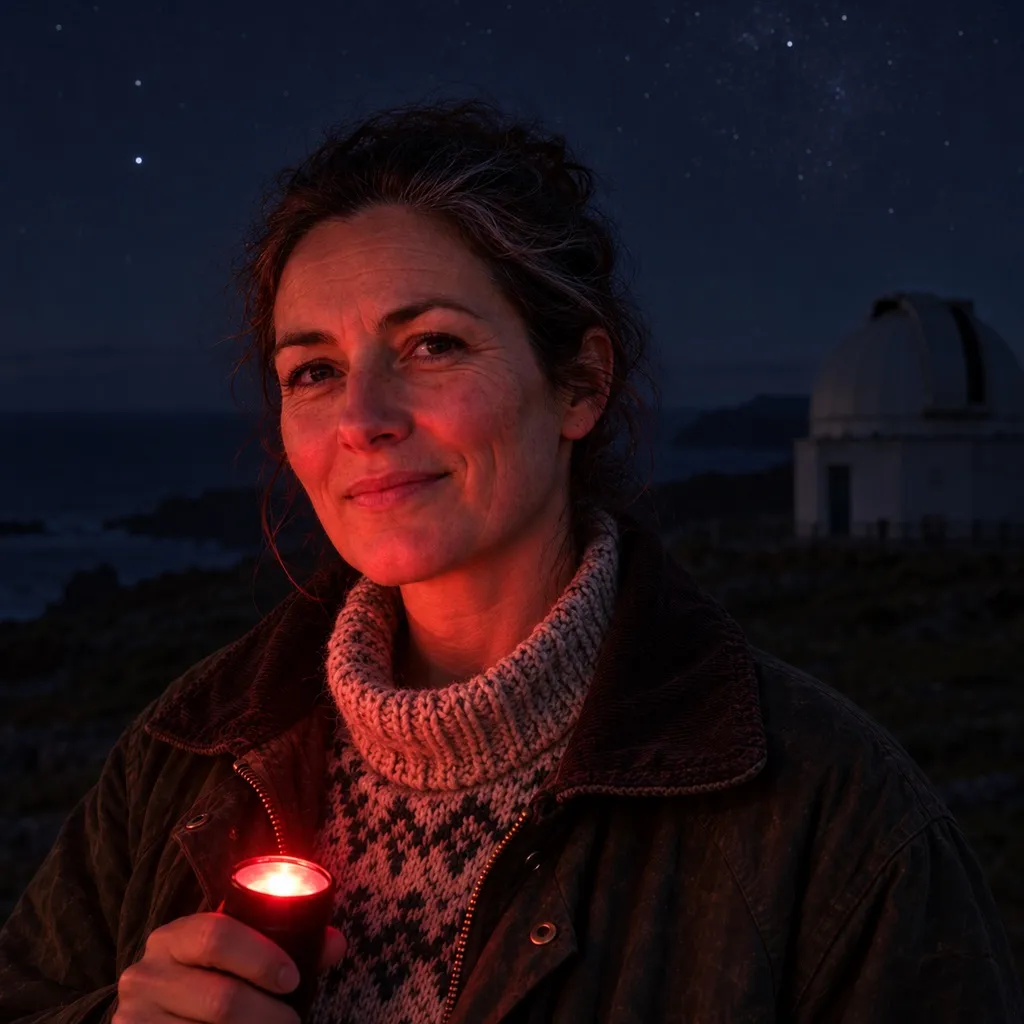
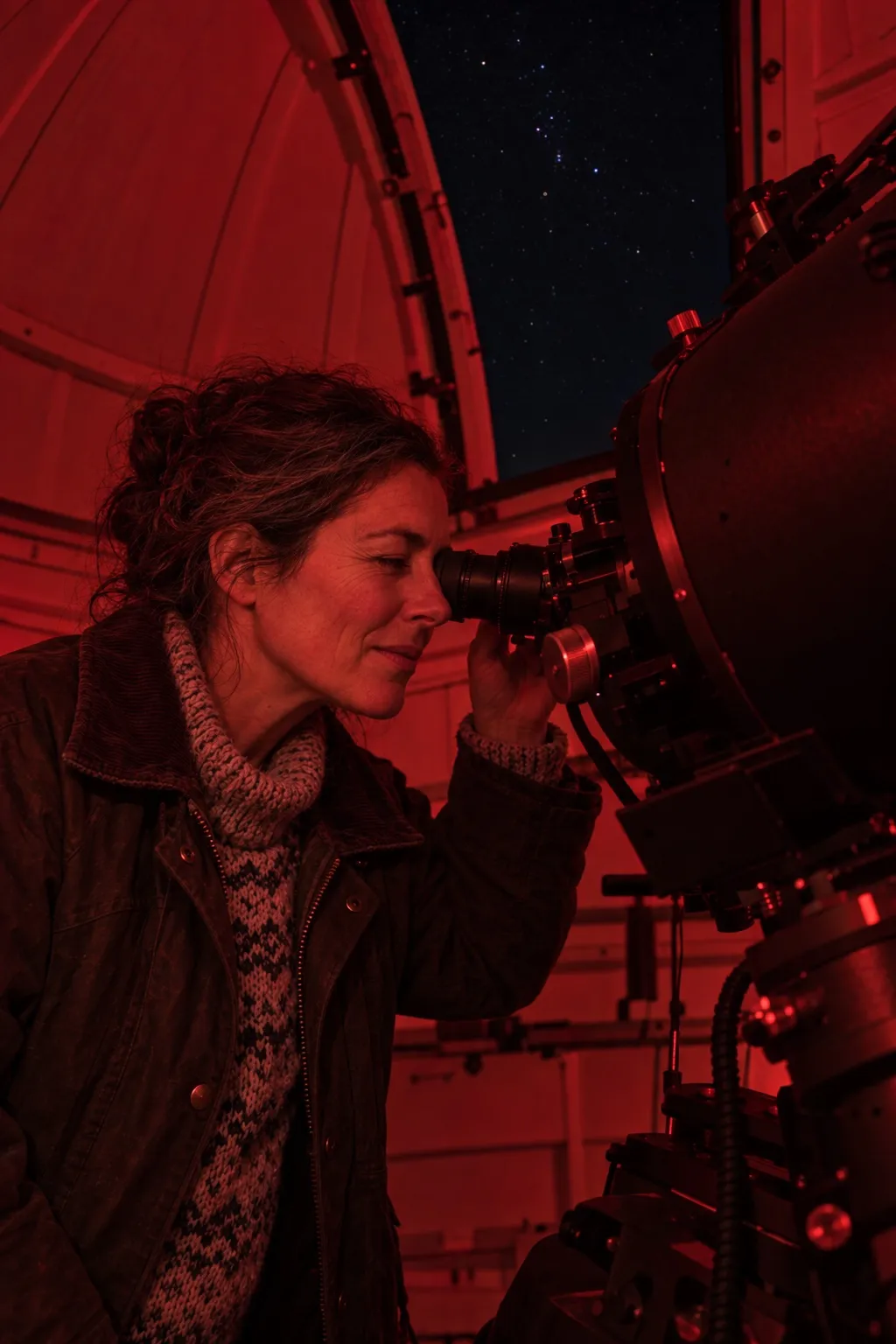
Orla, by the light of her torch.
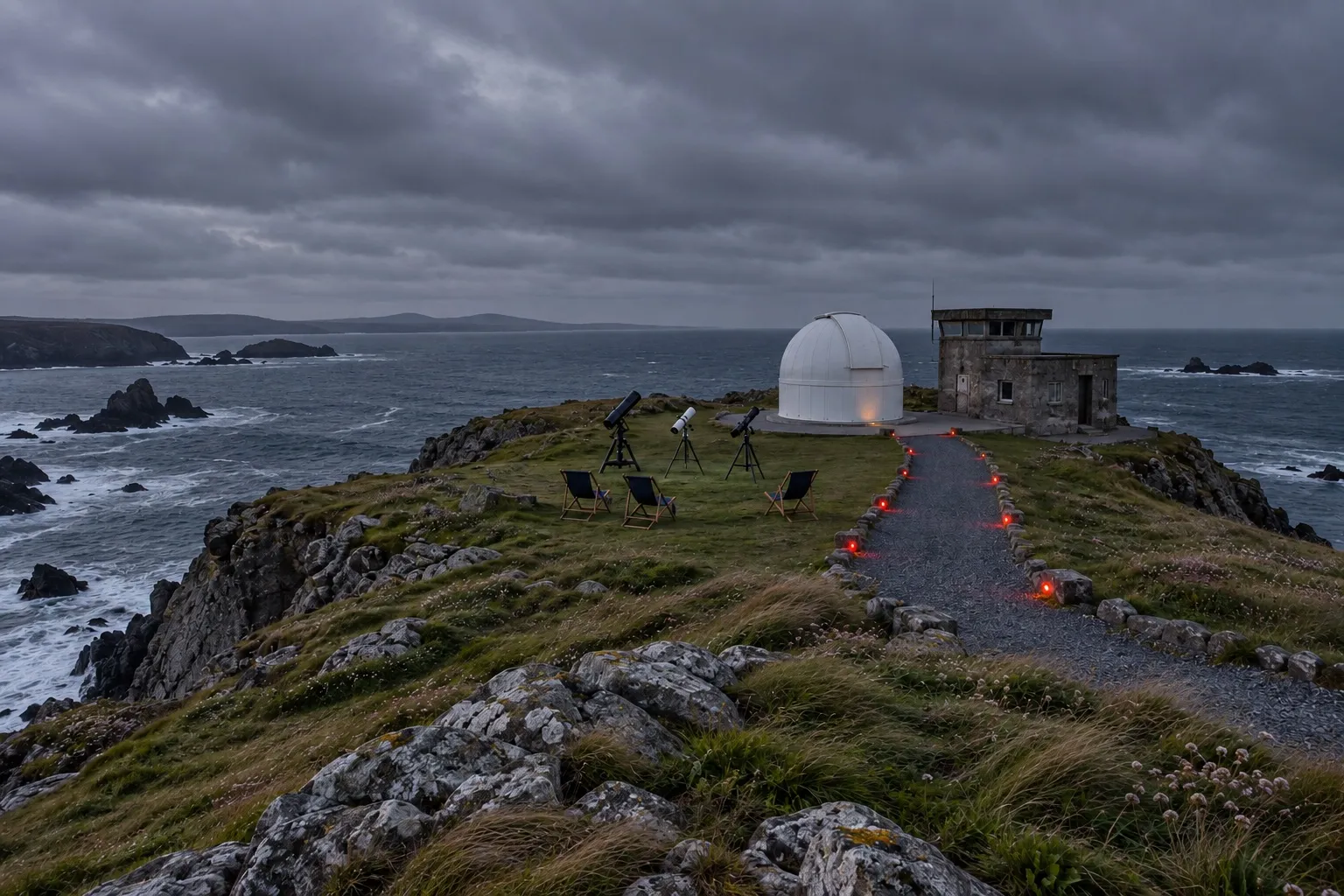
Inset: an honest cloudy evening on the headland. This is the night she moves.
Orla Breen runs every night herself. She is the only person behind the observatory, and she is the one who will meet you in the car park. Before this she spent eleven years as a weather forecaster, reading the sky for other people. She chose the headland for its darkness before she had a telescope.
“I spent eleven years telling people what the sky would do. Now I show them what it's for.”Orla Breen
So here is exactly what happens when it turns up.
“I will never sell you a cloudy night.”Orla Breen
It depends on the season and the sky, and Orla chooses on the night. Sky nights run from late August to mid-May, Thursday to Saturday. Things guests often see, in the order the year brings them:
Across the whole sky over the sea. Best in autumn, when the first sessions start at 22:30.
Another galaxy, 2.5 million light-years away. Once your eyes have adjusted you can find it without a telescope: a faint smudge, and the oldest light you will ever see.
Through the 14-inch reflector in the dome, in autumn and early winter. Small, sharp, and unmistakably it.
A cloud where stars are forming. Winter, when sessions start at 19:00.
A cluster of young stars, through the winter.
A 14-inch reflector in the dome. Three smaller telescopes in a row on the lawn, with deckchairs and blankets between them. One has a low eyepiece that can be used from a chair.
Nights are best without the moon, so the calendar follows it.
The observatory closes from mid-May to the end of July. At this latitude the sky never gets fully dark in those weeks: even at midnight, twilight hangs on the northern horizon. Orla would rather close than call that a sky night.
About two hours, starting after full darkness. Twelve guests at most. It begins on the lawn with no telescope at all: twenty minutes of letting your eyes adjust while Orla points out what is appearing, with a green laser pointer, as more and more stars come through. Then the telescopes.
€35 for adults, €18 for under-16s. Children aged 8 and over are welcome.
Online, for a named night. Booking opens for each month on the first of the month before.
More warm layers than you think. It is a headland in the Atlantic, and it is colder at night than it looks from the car.
The path from the car park to the lawn is level, 150 metres long, and edged with low red lights. One telescope has a low eyepiece that can be used from a chair.
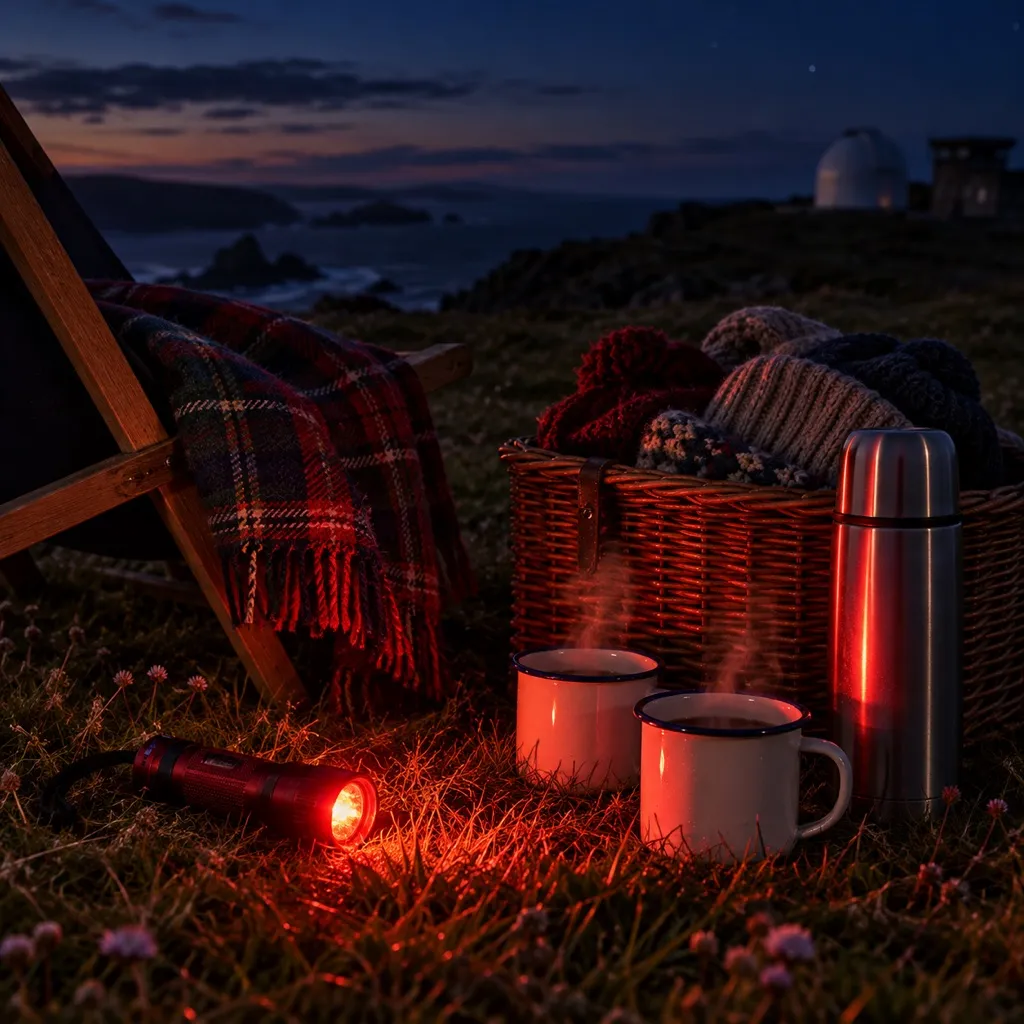
Orla gives everyone a red torch and asks for phones to be switched to their dimmest red setting or put away. White light resets your eyes, and they take about twenty minutes to adjust again.
Move your booking free up to 24 hours before. Inside 24 hours, it can still be moved if another guest takes your place.
Questions first? hello@doonvarra.ie. Orla answers every email herself.