The house, since 1921
Four people, a dog, an oak table, and 11,000 paper patterns.
Arthur Pellow opened the door in 1921, after cutting for other houses on the Row. Most of what he started is still downstairs, including the table he cut on.
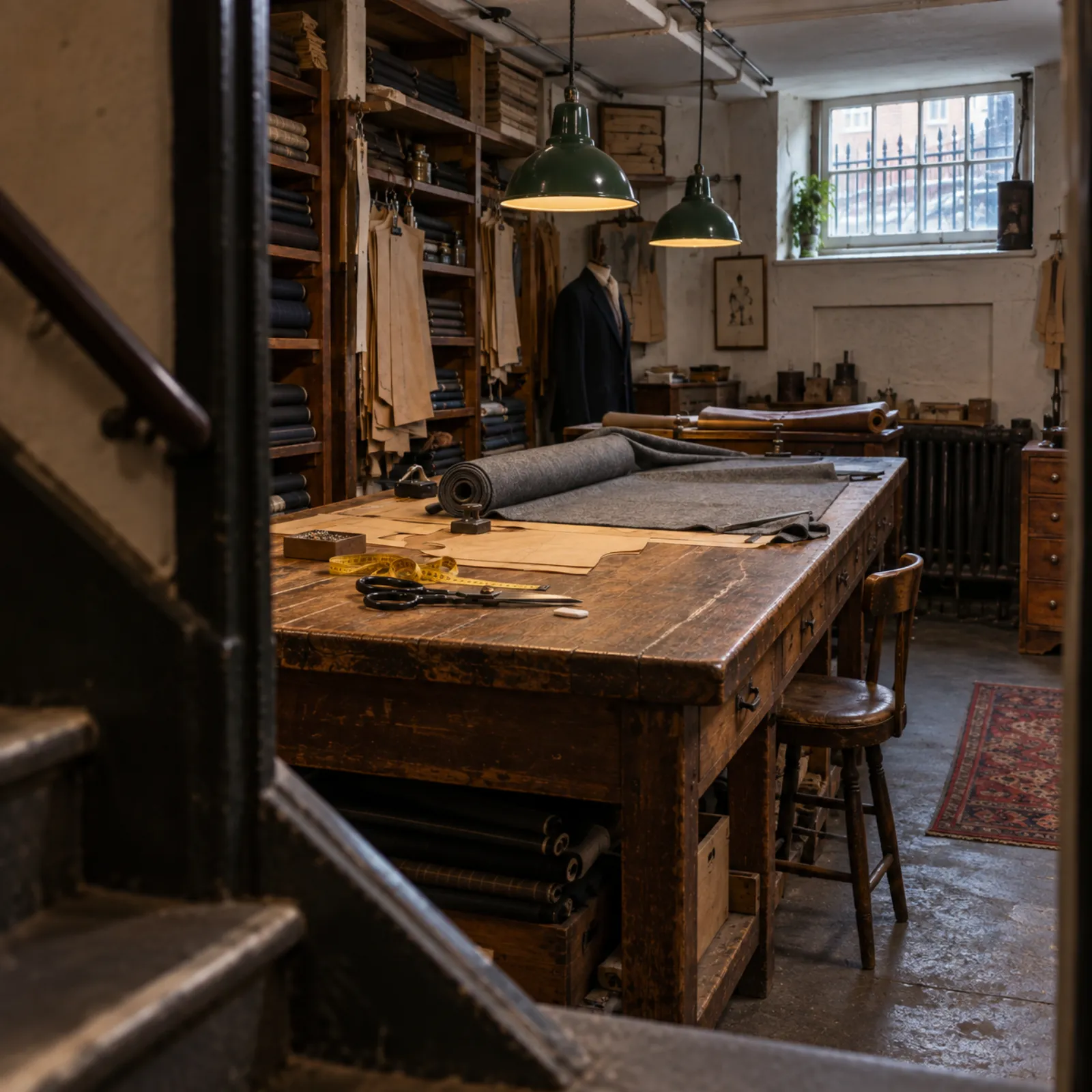
Why it still says Vane.
Arthur Pellow founded the house. Edmund Vane was his partner, and the better salesman. When Edmund died in 1962, his name stayed on the door.
Arthur's reason was not sentiment, or not only. He said the sign would look lopsided without him.
Sixty-odd years on, nobody has been brave enough to test it.
Who will be in the room.
A suit here is around sixty hours of hand work by four people. These are the ones you are most likely to meet, and one who will not get up.
-
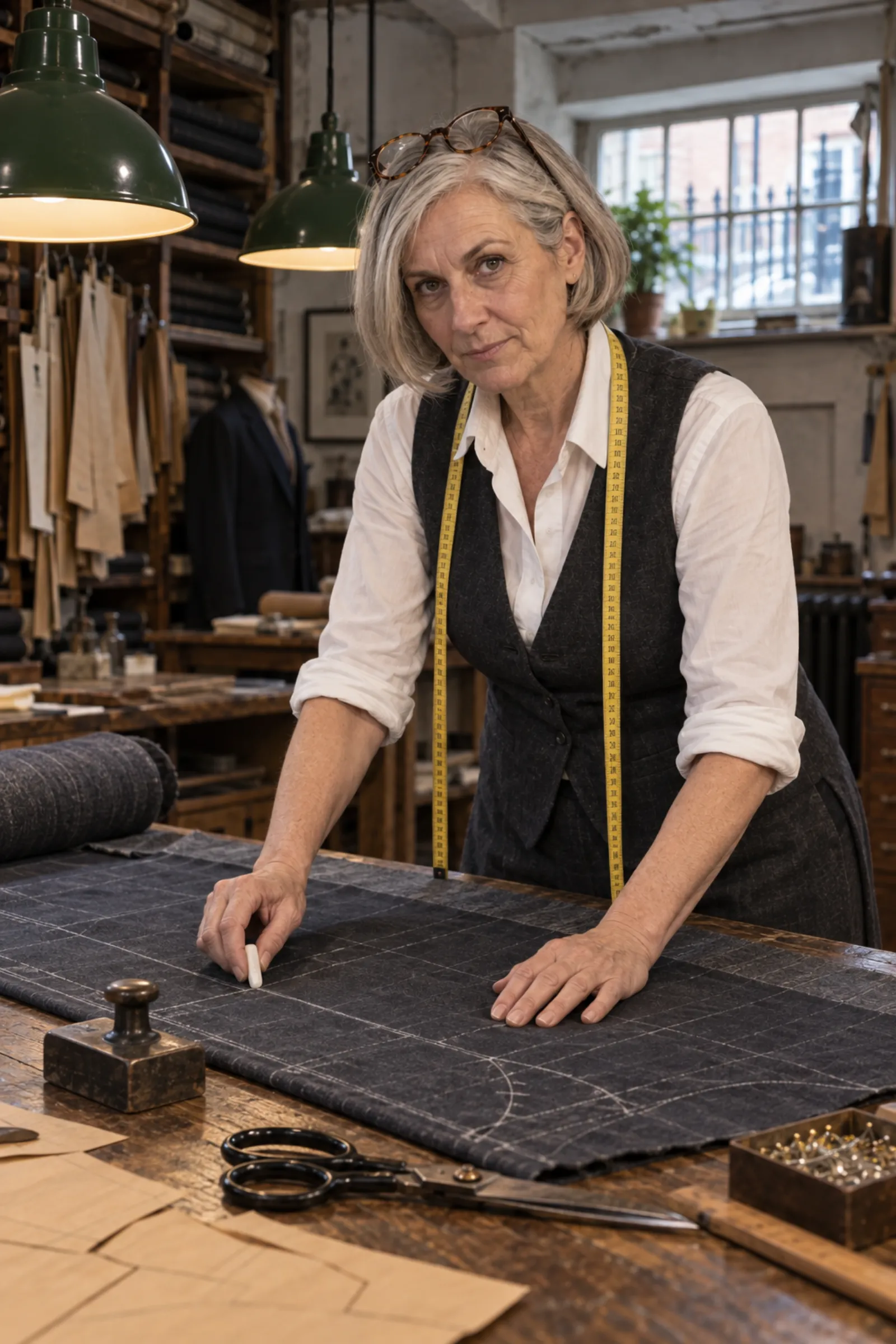
PhotographRuth, cutting over the scar Owner & head cutterRuth Pellow
58. Thirty-six years at this table.
The founder's granddaughter, and the third Pellow to hold the shears. Left-handed. Answers the telephone herself. Does not do email, has no plans to, and would like you to ring.
I make a record of a person, in cloth, at one moment in their life.
-

PhotographKofi, reading a pattern backwards Apprentice cutterKofi Mensah
26. Fourth year.
Grew up in Peckham and came to the Row from a fashion degree, then “had to unlearn everything that made clothes look good in photographs”. He now cuts trousers on his own.
The best eye for a sleeve I've seen in thirty years, and I'm not telling him that.
Please don't tell him either.
-
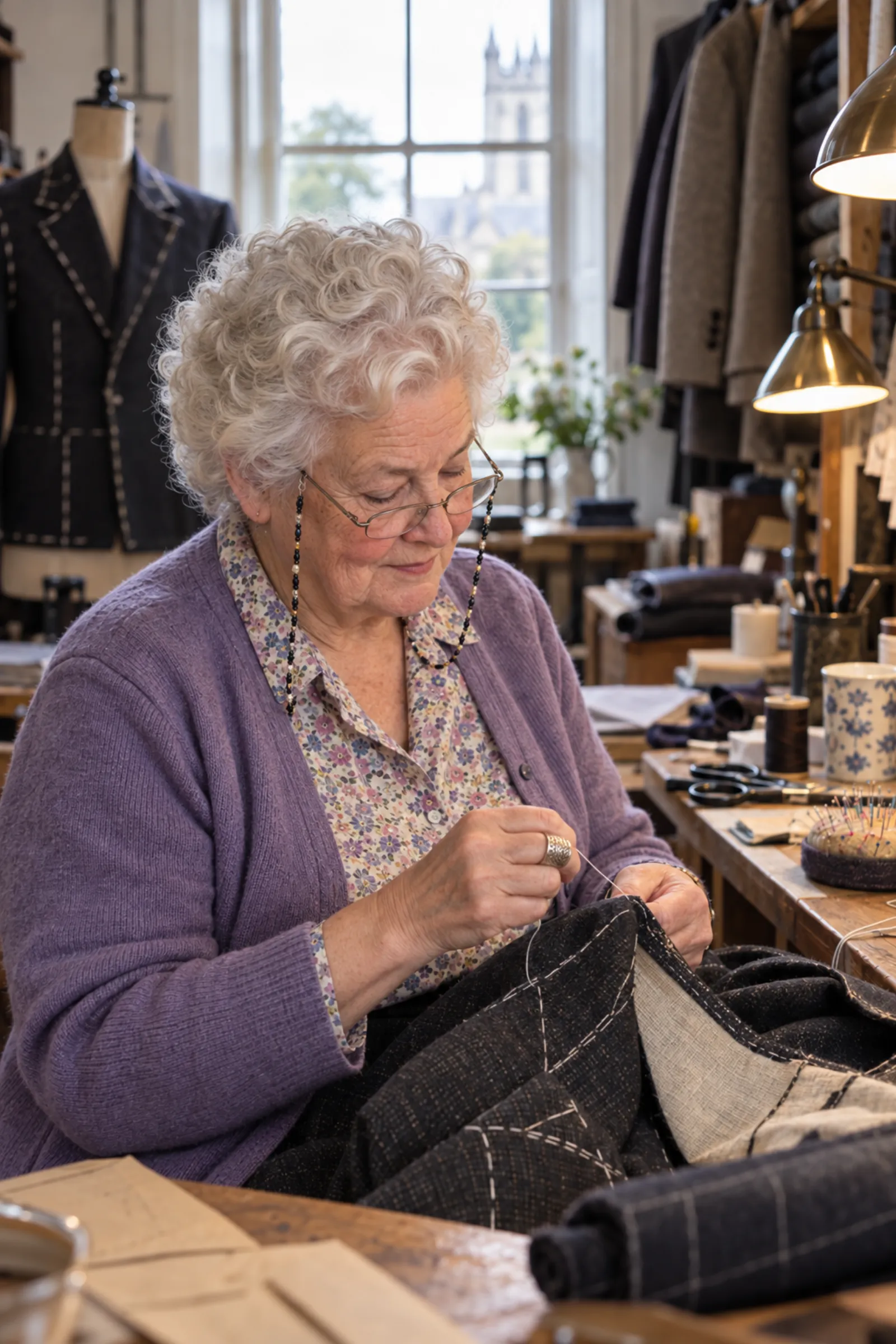
PhotographDot at her bench by the back window CoatmakerDorothy “Dot” Albright
71. Forty-four years of our jackets.
Works from a bench by the back window, because the light is better and she is not moving it for anyone. She can tell which coatmaker made a jacket by the buttonholes. Including, one assumes, her own.
-
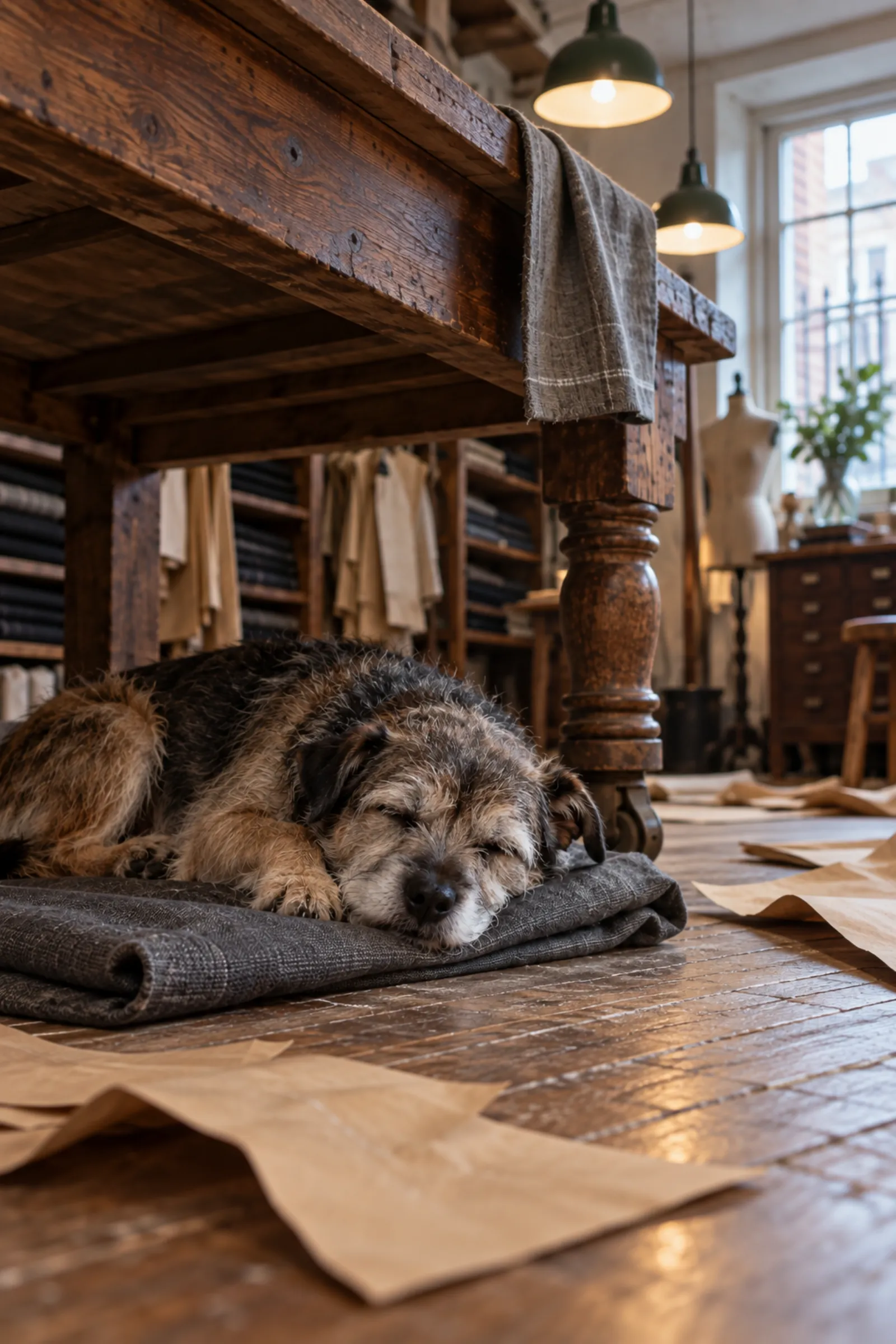
PhotographHugo, asleep under the table, as usual Under the tableHugo
A Border terrier. Very old.
Sleeps under the cutting table. Does not take appointments, does not attend fittings, and is not for sale. People ask.
Oak, 1921. One scar.
The table came with the house. In 1940, during the Blitz, a piece of window glass landed on it and left a long pale scar down the grain.
Arthur refused to have it planed out. Ruth still cuts over it. If your suit is made here, it will have been cut across a line that has been there since 1940.
The pattern library
11,000
Brown paper patterns, one for every customer since 1921.
They hang on hooks, in rows, in the cellar, each one labelled in pencil. Every one is somebody, at one moment in their life.
Since 1988 every pattern has been chalked from the “wrong” side, because she is left-handed. The apprentices learn to read them backwards.
If you come back after twenty years, you are cut from your old pattern, “plus whatever the twenty years added”. A customer who first came in 1994 was re-measured from his in 2023, at 91.
Every order since 1921, by hand.
Every order the house has taken is written in a ledger, with a line for “remarks”. The remarks are where the house keeps its opinions.
Names stay in the ledgers. They do not leave the building. The house has made suits for people you would recognise and has never said who.
The things that do the work.
The shears
Ruth's shears were her grandfather's. They are still sharpened by the same family firm in Sheffield.
The chalk and the paper
Every suit begins as a brown paper pattern, chalked (from the left, lately) and cut once. Then it goes on a hook downstairs and stays there.
The book pocket
Every Pellow & Vane jacket has a hidden inside pocket sized for a paperback. It has been there since 1921. Nobody has ever been asked if they wanted it.
The cellar door
Painted on it: Measure twice. Cut once. Measure again on Tuesday. People change shape over a weekend.
A short history, from the ledgers.
Three Pellows with the shears, one table, and a line for remarks.
- 1921
Arthur Pellow opens on Savile Row. The oak table dates from that year. So does the book pocket.
- 1936
A customer insists on turn-ups. He is told. He insists. The ledger notes it.
- 1940
The Blitz. Window glass lands on the cutting table. Arthur will not have the scar planed out.
- 1962
Edmund Vane dies. His name stays on the door, for the sake of the sign.
- 1988
The patterns start being chalked from the other side.
- 1994
A dark grey suit is ordered “to be buried in”. It goes to every family wedding instead.
- 2023
Its owner comes back at 91 for another, “for the actual funeral, the first one's worn out”. He is cut from his 1994 pattern.
Ring Ruth. Or come and see the workshop.
The door is at street level. The workshop is downstairs, and you are welcome to see it: the table, the cellar, Dot's window, and Hugo, who will stay where he is.
- Address
- Savile Row, London W1
- Nearest Tube
- Piccadilly Circus or Oxford Circus
Hours
| Monday to Friday | 9:00 to 17:30 |
|---|---|
| Saturday | By appointment |
| Sunday | Closed |
The waiting list for a first appointment is currently about three weeks.